
Word vs. World

Jesus delivers His Father's message to His people. The sinful world promotes self-love rather than true love for God and His people.
Labels: Bible study
posted by Andrew Lindsey | 7:00 PM
|
0 comments


Then [Jesus] said to them all, "If anyone wants to come with Me, he must deny himself, take up his cross daily, and follow Me. For whoever wants to save his life will lose it, but whoever loses his life because of Me will save it. (Luke 9:23-24, HCSB)
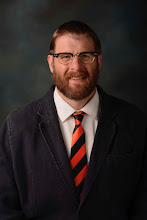
follower of Christ, husband of Abby, father of Christian, Georgia Grace, and Rory Faith, deacon at Kosmosdale Baptist Church, tutor with Scholé Christian Tradition and Scholé Academy








Jesus delivers His Father's message to His people. The sinful world promotes self-love rather than true love for God and His people.
Labels: Bible study
posted by Andrew Lindsey | 7:00 PM
|
0 comments

For the Mafia, family, ethnicity, and a type of religion are all blended into a type of organizing principle by which a kind of loyalty among criminals is maintained. Therefore, in her video on The Godfather, Laura ends up discussing religion. Comparing situations from The Godfather with the TV show The Sopranos, Laura discusses how mobsters (and their families) are often depicted as trying to pay the Catholic church in order to assuage their consciences. This leads Laura to observe:

The idea that you can pay your way into Heaven: so many religions–maybe like every single religion–thinks this. [It's] a bizarre thing to believe, [but] every religion does believe it in one way or another. Members of the Mormon church, for example, like to look at other religions and [say], 'We don't believe in that,' and yet they do, because in order to get a temple recommend, you have to pay 10% of your money to the church, and if you are not a full tithe-payer, you can't get a temple recommend, and if you don't get a temple recommend, you can't get all the blessings that get you into the top tier of Heaven.
My comment, re: Laura's statement, "pay your way into Heaven... every religion does believe it in one way or another" is that this is definitionally NOT true of Protestant Christianity. We believe that a person is justified (that is: counted right in God's sight, and thus counted fit for Heaven) on the basis of faith alone. Adding any works at all (including any kind of 'payment') is considered heretical. It is important to keep this in mind as we lovingly present the truth of what Jesus has done for us.
Labels: apologetics
posted by Andrew Lindsey | 3:31 PM
|
0 comments
...then we must conclude that the storms that blow against us are not from God. They are part of the natural order which follows a course of natural law. [Jim Evans, quoted in the Opelika-Auburn News, C1, 3 September 2005 under "Where is God in the Storm?"]
Why is it that we feel compelled to let God off the hook, as it were? Why do we want to find comfort by saying that God had nothing to do with this? Are we really better off with a God who is little more powerful than the Red Cross, running to the disaster to hold our hand in the aftermath? This is the god that some have constructed in their imaginations.
Here you see that when God works in and by evil men, evil deeds result; yet God, though He does evil by means of evil men, cannot act evilly Himself, for He is good, and cannot do evil; but He uses evil instruments, which cannot escape the impulse and movement of His power. The fault which accounts for evil being done when God moves to action lies in these instruments, which God does not allow to be idle. In the same way a carpenter would cut badly with a saw-toothed axe. Hence it is that the ungodly man cannot but err and sin always, because under the impulse of Divine power he is not allowed to be idle, but wills, desires, and acts according to his nature.This is sure and certain, if we believe that God is omnipotent [emphasis added]; as it is also certain that the ungodly man is a creature of God, but one which, being perverted and left to itself without the Spirit of God, cannot will or do good. God’s omnipotence makes it impossible for the ungodly man to escape the action upon him of the movement of God; of necessity he is subject to it, and obeys it; but his corruption, his turning of himself from God, makes it impossible for him to be moved and to act well. God cannot suspend His omnipotence on account of man’s perversion, and the ungodly man cannot alter his perversion. As a result he sins and errs incessantly and inevitably until he is set right by the Spirit of God. [Martin Luther, The Bondage of the Will, translated by J.I. Packer and O.R. Johnston (2002): 204-205]
For the earnest expectation of the creation eagerly waits for the revealing of the sons of God. For the creation was subjected to futility, not willingly, but because of Him who subjected it in hope; because the creation itself also will be delivered from the bondage of corruption into the glorious liberty of the children of God. For we know that the whole creation groans and labors with birth pangs together until now. Not only that, but we also who have the firstfruits of the Spirit, even we ourselves groan within ourselves, eagerly waiting for the adoption, the redemption of our body. For we were saved in this hope, but hope that is seen is not hope; for why does one still hope for what he sees? But if we hope for what we do not see, we eagerly wait for it with perseverance.Likewise the Spirit also helps in our weaknesses. For we do not know what we should pray for as we ought, but the Spirit Himself makes intercession for us with groanings which cannot be uttered. Now He who searches the hearts knows what the mind of the Spirit is, because He makes intercession for the saints according to the will of God. And we know that all things work together for good to those who love God, to those who are the called according to His purpose. (Romans 8:19-25 NKJV)
Labels: Christian worldview
posted by Andrew Lindsey | 8:07 PM
|
0 comments

For the joy set before Him–and before us!–Jesus endured the Cross, despising the shame, calling upon His Father, preaching hope.
Labels: Bible study
posted by Andrew Lindsey | 5:48 PM
|
0 comments
 |
| The West Wing: a Democratic Party fantasy |
In a key scene from the show (one that I've seen referenced a couple of times in a Reddit forum even this past week, from people offering it up as "the best monologue/speech in a film or TV show ever"), President Jed Bartlet confronts Dr. Jenna Jacobs, a conservative Christian radio talk-show host, whose character is based on Dr. Laura Schlessinger: a conservative Jewish radio talk-show host who was known for calling out homosexuality as an abomination.
President Bartlet: I like your show. I like how you call homosexuality an abomination.
Dr. Jenna Jacobs: I don’t say homosexuality is an abomination, Mr. President. The Bible does.
President Bartlet: Yes, it does. Leviticus.
Dr. Jenna Jacobs: 18:22.
President Bartlet: Chapter and verse. I wanted to ask you a couple of questions while I had you here.
I’m interested in selling my youngest daughter into slavery as sanctioned in Exodus 21:7. She’s a Georgetown sophomore, speaks fluent Italian, always cleared the table when it was her turn. What would a good price for her be?
While thinking about that, can I ask another? My Chief of Staff Leo McGarry insists on working on the Sabbath. Exodus 35:2 clearly says he should be put to death. Am I morally obligated to kill him myself, or is it okay to call the police?
Here’s one that’s really important ’cause we’ve got a lot of sports fans in this town: Touching the skin of a dead pig makes one unclean. Leviticus 11:7. If they promise to wear gloves, can the Washington Redskins still play football? Can Notre Dame? Can West Point?
Does the whole town really have to be together to stone my brother John for planting different crops side by side?
Can I burn my mother in a small family gathering for wearing garments made from two different threads?
---
 |
| Aaron Sorkin: perhaps the greatest living screenwriter; not the best theologian |
The Distinction between Moral, Civil, and Ceremonial Laws
Old Testament law contains moral, civil, and ceremonial aspects, and the moral aspects are everlasting, as reflective of God's character, while the civil and ceremonial aspects were specifically, directly applied only in the Old Covenant era.
Some people deny the distinction as described above, and they question where such a distinction is found in the biblical text.
While it is acknowledged that there is no specific verse spelling out distinctions in the Mosaic Law in so many words, the three-fold distinction of the Law can be discerned through a systematic reading of Scripture. As there is no single verse or passage of contiguous verses spelling out a full doctrine of the Trinity or the hypostatic union, yet Christians receive these concepts as “biblical” due to careful synthesis of texts, so Christians have historically received the three-fold distinction of the Law without a specific proof-text.
Let us suppose that God intended to set apart a certain portion of the Law as specially reflecting an everlasting moral law. God could have fulfilled this intention through inspiring a verse or series of verses in which Moses tuaght about distinctions in the Law. On the other hand, God could have chosen to set apart a certain portion of the Law in a more dramatic, historical way. He could have:
1. Allowed all the people to hear his voice announcing certain laws,
2. Chosen to write certain laws with His finger upon stone tablets,
3. Commanded His chosen nation to carry around those stone tablets for decades within an ornate, gold-plated box,
4. Made the golden box containing those laws the center of worship for His chosen nation.
Christians who believe that there is a three-fold distinction in the Law, with a special, enduring place given to the moral law, believe that God, in fact, established a distinction in the Law historically, in the way just described.
Let us consider as well the different ways in which the New Testament applies specific laws from the Mosaic Law. For example, consider the following three New Testament quotes from the Old Testament.
#1. 9 For it is written in the Law of Moses: “Do not muzzle an ox while it is treading out the grain.” Is it about oxen that God is concerned? 10 Surely he says this for us, doesn’t he? Yes, this was written for us, because whoever plows and threshes should be able to do so in the hope of sharing in the harvest. 11 If we have sown spiritual seed among you, is it too much if we reap a material harvest from you? 12 If others have this right of support from you, shouldn’t we have it all the more? But we did not use this right. On the contrary, we put up with anything rather than hinder the gospel of Christ. (1 Corinthians 9:9-12 ESV)
#2. …without the shedding of blood there is no forgiveness of sins. (Hebrews 9:22b ESV)
#3. Children, obey your parents in the Lord, for this is right. “Honor your father and mother” (this is the first commandment with a promise), that it may go well with you and that you may live long in the land.” (Ephesians 6:1-2 ESV)
Notice the different way in which these various laws are treated.
In #1, the law which is cited had regulated the civil actions of people within ancient Israel; a principle is gleaned from this law and is applied to the Church.
In #2 [the reader will have to look at the context of both Hebrews and Leviticus to see this], the law that is cited had regulated the ceremonial actions [especially] of the priestly class in regard to animal sacrifices; in the surrounding verses, this law is treated as a type, which is fulfilled by the sacrifice of Christ upon the Cross.
In #3, the Apostle cites the fifth of the Ten Commandments and directly applies it to individuals in the church who received his letter.
Please note:
1. In these examples, we see the three-fold distinction of the Law. The above examples provide a model by which we are to understand how Old Covenant laws apply today. Principles should be gleaned from civil laws and applied, primarily to the Church, but also to society as a whole. The ceremonial laws should be seen (at least primarily) as typical of Christ, and we should worship and depend upon Him as the fulfillment of these laws. Moral laws should be embraced, and believers should seek to keep these laws by the power of the Holy Spirit, out of a heart of gratitude toward God. (Just as Paul said to “obey” the fifth commandment, we should seek to “obey” the other commandments of the moral law.)
2. In most cases it is not difficult to distinguish civil, ceremonial, and moral laws. Those who object to the three-fold distinction of the Law often act as if, because the laws are often not divided out in the biblical text, it is impossible to determine into which category a specific law should be placed. But notice that the attentive reader can make distinctions without much problem at all though a series of basic questions, such as:
a. Is the law about family property rights or rules of ownership and reimbursement?
b. Is the law under consideration about sacrifices or forms of worship in the temple/tabernacle?
c. Is the law part of the Ten Commandments?
Given these considerations, we should understand Leviticus 18:22 and the other Old Testament laws mentioned by Bartlet/Sorkin not as ancient relics to be dismissed, nor as current legal mandates to be directly implemented into American laws, but as containing principles that should be applied according to either their ceremonial or civil uses. We should look at these laws as containing principles that direct us to Christ Himself, and that direct us in discerning principles of how to live for Him.
The Difference between "Sanctioned" and "Regulated"
In seeking to undermine the idea that homosexual activity could rightly be called an "abomination," Sorkin seeks to highlight how offensive the Old Testament law sounds to all Americans, so that he can then say that Leviticus 18:22 is equally offensive. To this end, he has Bartlet say (ironically): "I’m interested in selling my youngest daughter into slavery as sanctioned in Exodus 21:7..."
But Exodus 21:7 does not sanction selling one's daughter into slavery. Being a distinguished writer, Sorkin should be a careful enough reader to see that Exodus 21:7 begins with the words "and if..." (rendered as "when..." in some modern translations). Sorkin should certainly understand the difference between a command and a conditional statement. In context, it is clear that Exodus 21:7 is dealing with a situation that is already happening among people at the time. The verse does not sanction that situation, but it regulates it to make sure that the girls suffering under that situation are not left homeless and destitute. Other Old Testament regulations (such as Lev 23:22) create a situation in which the poor are better cared for, so that they would not feel forced into participating in the indentured servitude system. In the New Testament, there are verses (such as Gal 3:28, Phil 2:3, and Philemon 15-16) that undermine slavery as a whole.
Burned for the Wrong Clothes?
Perhaps the clearest indication that Sorkin's treatment of Old Testament law is made in bad faith (rather than just being a case of misunderstanding) is when he has Bartlet ask: "Can I burn my mother in a small family gathering for wearing garments made from two different threads?" From this question, viewers who have not carefully read Leviticus or Deuteronomy would assume that the Old Testament prescribes the death penalty (and specifically burning) for wearing mixed-cloth garments. It simply does not.
Conclusion
In certain atheist/agnostic circles, mocking statements like those made by President Bartlet on The West Wing are prevalent. Christians should be equipped and ready to give a defense of God's Word. More than anything, we must be confident in pointing others to Christ. Whatever the specific modern-day application of a particular biblical law might be, the law as a whole shows us that when God gives us standards, we fall short of those standards. We are all sinners in need of a Savior. Jesus perfectly kept the law that we could not keep, He paid the penalty for our sins on the Cross, and He rose again on the third day, conquering sin, death, and Hell for all who believe in Him.
Labels: Bible study, Christian worldview
posted by Andrew Lindsey | 5:57 PM
|
0 comments

Jesus has the authority and power of His Father. He faithfully preserves His people. God honors His Word. This is believers' hope.
Labels: Bible study
posted by Andrew Lindsey | 9:40 PM
|
0 comments

8 For we do not want you to be unaware, brothers, of the affliction we experienced in Asia. For we were so utterly burdened beyond our strength that we despaired of life itself. 9 Indeed, we felt that we had received the sentence of death. But that was to make us rely not on ourselves but on God who raises the dead. 10 He delivered us from such a deadly peril, and he will deliver us. On him we have set our hope that he will deliver us again. 11 You also must help us by prayer, so that many will give thanks on our behalf for the blessing granted us through the prayers of many. (2 Corinthians 1:3-11 ESV)
When believers suffer affliction, as we prayerfully endure, God comforts us, so that we may be able to comfort others in affliction.
Labels: Bible study
posted by Andrew Lindsey | 10:06 PM
|
0 comments

26 If anyone thinks he is religious and does not bridle his tongue but deceives his heart, this person’s religion is worthless. 27 Religion that is pure and undefiled before God the Father is this: to visit orphans and widows in their affliction, and to keep oneself unstained from the world. (James 1:22-27 ESV)
As clear from context, James' teaching is given to suffering people. In our suffering, we gain maturity by ministering to others well.
posted by Andrew Lindsey | 10:51 AM
|
0 comments

In trials, we must pray for wisdom so our thoughts, words, and actions are motivated by godliness–not pain, anger, and frustrations.
Labels: Bible study
posted by Andrew Lindsey | 11:47 AM
|
0 comments

Labels: Bible study
posted by Andrew Lindsey | 1:49 PM
|
0 comments
