Call To Die

Then [Jesus] said to them all, "If anyone wants to come with Me, he must deny himself, take up his cross daily, and follow Me. For whoever wants to save his life will lose it, but whoever loses his life because of Me will save it. (Luke 9:23-24, HCSB)

My Photo
Name:
Location: Louisville, Kentucky, United States

follower of Christ, husband of Abby, father of Christian, Georgia Grace, and Rory Faith, deacon at Kosmosdale Baptist Church, tutor with Scholé Christian Tradition and Scholé Academy

Monday, December 29, 2025

Charles Spurgeon on the Gospel: Substitutionary Atonement

Charles Spurgeon wrote in his Autobiography

I have always considered, with Luther and Calvin, that the sum and substance of the gospel lies in that word Substitution–Christ standing in the stead of man. If I understand the gospel, it is this: I deserve to be lost forever; the only reason I should not be damned is this, that Christ was punished in my stead, and there is no need to execute a sentence twice for sin.

Labels:

Wednesday, January 10, 2024

My Personal Testimony

Christians have always told the Good News of Jesus to people who are not Christians in two different but connected ways. Christians have focused on: 1. telling others about the teaching of the Bible; 2. speaking about their own personal relationship with Jesus.

We see examples of how the very first Christians told the Good News of Jesus through the teaching of the Apostle Paul. In Acts 17:22-31, we read how Paul told the Good News of Jesus by explaining teaching based on the Bible. In Acts 22:6-21 and 26:4-23 we read how Paul also told about his personal relationship with Jesus in order to share the Good News about who Jesus is and what He has done.

Recently, I was re-visiting the story of my personal relationship with Jesus. I would like to once again recount that story below:

From the time when I was a small child, I have always gone to church meetings with my grandmother or my parents and most people thought that I was a good person. When I was nine years old, I came to understand that I was not a good person: that I had broken God’s Law and my life needed to be changed or I would face God’s wrath forever. I had heard that if God was angry with me and I died, my soul would go to place of pain and fire called Hell. I talked to the preacher at the church I went to about what I needed to do to stay out of Hell. The preacher asked me some questions about Jesus and I gave him all the answers that he wanted to hear because I knew many facts about Jesus from having gone to church for so long. The preacher told me to repeat a prayer after him and to completely believe what I prayed. I prayed this prayer and wanted to believe what I prayed. Still, there was no basic change in my life. It was difficult to be certain in my mind that I had completely believed the prayer that I had prayed, so it was difficult to be certain that I was not headed for Hell when I died.

On one Sunday morning when I was thirteen years old, my Sunday school teacher, Russell Jones, spoke about how Jesus is Lord: how He is completely good and He is King over everything. The teacher said that if we had not called out to Jesus to take control of our lives and to take away our badness– and give us His goodness– then God was still angry with us for our sins and we would go to Hell for breaking His Law.

I then understood that I was someone who lived only for my wants and that I had not submitted to the Lord Jesus. I called out to Jesus to take control of my life. I asked Him to take away my badness and to give me His goodness.

Since that day, it has often been difficult to live for the Lord Jesus. I have often wanted to follow plans that I have made for myself rather than the plans that Jesus has for me, as found in His book, the Bible. Every day, I call out to Jesus to give me understanding from the Bible of how to live in a way that pleases Him. I believe that Jesus is in control of everything that happens in the world. I believe that Jesus became my friend when I called out to Him. I believe that everything that happens in the lives of Jesus’ friends is for our good, even if some things seem bad at first. I believe that anyone who calls out to Jesus to take control of his or her life, trusting in Him alone, can be certain that God will never be angry with him or her, that he or she will never go to Hell, and that he or she will live as Jesus’ friend forever.

Labels:

Thursday, August 31, 2023

"Inclusivism"=The Death of Missions

In a blogpost published on March 10, 2011, Kevin DeYoung gave an excellent exegetical argument from John 14:6 arguing that, especially in the context of the entire Gospel of John, Jesus certainly taught the necessity of faith in Him for salvation. [See DeYoung's post HERE.]

In the original comment section from DeYoung's blogpost mentioned above, someone called "Spera in Deo" attempted to defend inclusivism. Spera defines inclusivism as "Hope for the Heathen" and explains the inclusivist view of what Jesus taught as follows:
Hope for the Heathen Jesus (HHJ): Jesus believed that while God would save some A.D. adults [adults living after the coming of Christ] who do not believe that Jesus is the Son of God (perhaps because they never even heard the gospel message), he also believed that the only way for an A.D. adult who heard the gospel message to be saved by God is for that adult to believe that Jesus is the Son of God.
I responded to the above comment from Spera with the following:
Doesn’t this thinking inevitably lead to the conclusion that the LAST thing that Christians would want to do is to go on missions to tell “unreached” people the gospel message? Because under the model you have proposed, it is only once the “A.D. adult” has heard the gospel message that his or her options for salvation are narrowed down to the exclusive way in Christ. And those who have never before heard the gospel would seem far more likely to reject this teaching and stick with their own system of belief (under which they might have been saved if they hadn’t heard the gospel, according to the inclusivist), therefore the “good news” wouldn’t be the only hope of salvation as much as the unique source of damnation.
If those who have not yet heard the gospel may be saved under their own belief system–the belief system (in all likelihood) of their countless ancestors, the belief system in which they may very well find a high degree of comfort and assurance–as long as they do not know about the Jesus they are missing, then the gospel becomes very bad news indeed.

But the truth is that we are all by nature children under wrath (Eph 2:1), rebels against our Creator, and subject to the punishment of Hell. The reason the gospel is "good news" is because out of this hopeless situation God in Christ has provided redemption through His perfect life, death, burial, and resurrection on behalf of sinners.

Labels: ,

Thursday, December 08, 2022

Inspiring and Challenging Quotes from the Letters and Journals of Jim Elliot

[From a handout distributed at the Sunday Bible Study of Grace Heritage Church, August 14, 2005.]

"He is no fool who gives what he cannot keep to gain what he cannot lose." 
"God, I pray, light these idle sticks of my life, and may I burn up for Thee. Consume my life, my God, for it is Thine. I seek not a long life but a full one like Yours, Lord Jesus." 
"The holy life of a fearless Samuel brought trembling to the elders of Bethlehem. Lord, wilt Thou impart a holiness of this sort to me? I can make men laugh; I cannot make them tremble." [re: 1 Sam 16:4
"Glad to get the opportunity to preach the gospel of the matchless grace of our God to stoical, pagan Indians. I only hope that He will let me preach to those who have never heard the name of Jesus. What else is worth-while in this life? I have heard nothing better. Lord, send me." 
"'He makes His ministers a flame of fire.' [re: Psa 104:4.] Am I ignitable? God deliver me from the dread asbestos of 'other things.' Saturate me with the oil of the Spirit that I may be a flame. But flame is transient: short-lived. Canst thou bear this, my soul: short life? In me there dwells the Spirit of the Great Short-Lived, whose zeal for God's house consumed Him. 'Make me Thy fuel, Flame of God.'" 
"My preaching [all] last month was service for service's sake. Oh, how I thank Thee, Father, for my earthly father [Jim's Dad, Fred Elliot] who has seen the truth as to [my] motives for service. It is not the winning of souls nor the spreading of missions that should inflame me. Paul said, 'I count all loss that I may win (not souls) but Christ.'" [re: Phil 3:8
"I dare not stay at home while Quechuas perish. What if the well-filled church in my homeland needs stirring? They have the Scriptures, Moses, and the prophets, and a whole lot more. Their condemnation is written on their bank books and in the dust on their Bible covers."

Labels: , ,

Friday, February 01, 2019

Is "Our Father" the Gospel?

"'Hail Mary' is not the gospel."

The above quote is from my friend Eric Paulson, as a Roman Catholic man beside him questioned him due to us street-preaching over the chants of several Roman Catholics who were praying to Mary on June 4, 2011.

"Is the 'our Father' the gospel?" the Roman Catholic man challenged, referring to the fact that the throng was switching back and forth between these two prayers [i.e. the "Hail Mary" and the "our Father," which I refer to as the "Lord's Prayer" below].

"No," said Eric.

"It's not?" the man said, incredulously.

"No, it's not," said Eric [I'm paraphrasing this next part], "it's in books called 'Gospels,' but it's not the gospel." Eric emphasized that what people need to hear is the gospel itself.

A moment later the Roman Catholic man had walked off, and Eric asked me what I thought about the conversation. I replied that maybe the Lord's Prayer is part of the gospel.

"But it's not the gospel," Eric replied.

"Right," I said.

When this conversation took place, I felt a bit uncomfortable asserting that the Lord's Prayer is not the gospel. This is due to the fact that I realized the Prayer is a direct quote of Jesus' words, and I didn't want to say anything that sounded like it was denigrating the teaching of my Lord and Savior. But thinking back on the conversation, I must say that Eric was RIGHT, and I should have no discomfort in boldly asserting (as he did) that the Lord's Prayer is not the gospel.

I believe that further consideration of this issue may be helpful because there are all kind of good biblical teachings that are related to the gospel, but that are not themselves the gospel. Christians who are dedicated to proclaiming the gospel must be able to articulate what the gospel is NOT as well as what the gospel IS, and examining the Lord's Prayer in light of this fact may provide a model for how other Bible truths (which some people may assert are part of the gospel) should be addressed as well.

The Lord's Prayer is NOT the gospel for the following reasons:

1. The gospel is a message with a definite historical content concerning who Jesus is and what He has done on behalf of sinners. This message (also called the "message of the Cross") is summarized in New Testament passages such as 1 Corinthians 15:3-7. Because the Lord's Prayer does not contain the message concerning the historical facts of the gospel, it cannot be properly called the gospel message. (These historical facts are contained at the end of the books in which the Lord's Prayer is quoted, as the climax of the Gospel narratives.) The Lord's Prayer definitely springs from a doctrinal standpoint that cannot be denied if the gospel is to be truly understood (i.e., one cannot deny that our Father's name is/should be "hallowed," and one must understand that we must seek forgiveness of trespasses, if Christ's death for sins is to mean anything), but the fact that there is some relationship between the Lord's Prayer and the gospel doesn't mean that the Lord's Prayer is the gospel itself (by comparison: Genesis 1:1 is vital for an understanding of the biblical worldview/theology that is the necessary framework without which the gospel cannot be understood, but that does not mean that Genesis 1:1 is the gospel itself).

2. The gospel is a message that calls for a definite response involving confession of sin, repentance from sin, and faith in the Lord Jesus Christ, our Savior from sin. This response may be referred to as a gospel call as distinguished from the gospel message, mentioned above. The relationship between the gospel call and the gospel message is clearly seen in passages such as 2 Corinthians 5:18-20, in which the Apostle Paul refers to the gospel as "the message of reconciliation," and pleads with the Corinthians to "be reconciled with God," or Acts 2:14-41 in which the Apostle Peter immediately follows his gospel proclamation with the call to repent. When a person accepts the gospel, repents, is reconciled to God through faith in Christ Jesus, that person becomes a disciple of Jesus. But the Lord's Prayer contains no gospel call because those who Jesus taught the Lord's Prayer were already His disciples. As recorded in Matthew [6:5-15], the Lord's Prayer was given as part of the Sermon on the Mount, which Jesus preached primarily to His disciples, though with a view to the larger crowd as well [as demonstrated through a comparison of the beginning of the Sermon on the Mount, Matthew 5:1-2, with the end of the Sermon on the Mount, Matthew 7:24-29]; as recorded in Luke [11:2-4], Jesus reiterated the Lord's Prayer to His disciples in response to one disciple asking Him to teach them how to pray [see Luke 11:1]. The Lord's Prayer is NOT the gospel call because it is meant for those who are ALREADY following Jesus.

Labels: , , ,

Thursday, May 18, 2017

Is our salvation based on God punishing an innocent man?

Yesterday, I retweeted the following from Matt Smethurst, an elder at Third Avenue Baptist Church in Louisville, KY, and a contributor to The Gospel Coalition:
Justification: God declares us righteous in his courtroom.
Adoption: God welcomes us into his living room.

This Tweet prompted my friend Brian Preston (who has apparently been on some kind of theological journey since leaving the Southern Baptist Theological Seminary) to pose the following question: “Because He punished an innocent man?”

The following is my response.

In the sacrificial system, did the high priest shed the blood of an innocent animal on behalf of the people? When providing skins for Adam and Eve (Gen 3:21), was the blood of an innocent animal shed? Was Isaac innocent when God commanded Abraham to sacrifice him, and was the ram that God provided in his place innocent (Gen 22)? Was Joseph innocent when God purposed for him to be sent into slavery and imprisonment in Egypt, so that (once he had ascended to the throne) many might be saved through him (Gen 50:20)?

In addition to these foundational considerations from the fabric of Scripture, you have the explicit biblical statements:

“Surely he has borne our griefs and carried our sorrows; yet we esteemed him stricken, smitten by God, and afflicted. But he was pierced for our transgressions; he was crushed for our iniquities; upon him was the chastisement that brought us peace, and with his wounds we are healed.” (Isa 53:4-5)


“God made him who had no sin to be sin for us, so that in him we might become the righteousness of God.” (2 Cor 5:21)


“Christ redeemed us from the curse of the law by becoming a curse for us,” (Gal 3:13)

These biblical statements are further understood in light of covenantal and systematic considerations, which help to demonstrate why Christ’s death is in not properly analogous to a human father/king simply sentencing his innocent son/prince to death

Covenantally: according to the Covenant of Redemption, the Son freely entered into an arrangement with the Father by which, through His perfect obedience and substitutionary death, He would be awarded a people, united to Him for the glory of His name. (It was for the joy that was set before Him that the Son agreed to this arrangement, Heb 12:2.)

Systematically: the Son and the Father, though distinct persons, are yet one God; as “will” is properly attached to nature, rather than to person, it is according to the single divine will that the Son assumes His role of mediator.

According to both of the above considerations, there can be no idea of the Son unwillingly dying.

In all of these ways and more, the truth of substitutionary atonement is abundantly displayed. Did God punish an innocent man? Yes, in a very specific sense. That innocent man, before coming as a man, was one God with the Father from eternity. That innocent God-man, before coming as a man, had agreed from eternity past to die for sinful men, so that we might be redeemed, to the glory of His grace. We are naturally under a curse, and are characterized by transgressions, iniquities, enmity, griefs, and sorrows. It is these that Christ took upon Himself on the Cross. The willing death of that innocent man in our place is good news for us sinners.

Labels: ,

Monday, February 23, 2015

"We are the circumcision"


For we are the circumcision, who worship by the Spirit of God and glory in Christ Jesus and put no confidence in the flesh— (Phil 2:3 ESV)

Already in the ministry of the Old Testament prophet Jeremiah, YHWH had challenged His people to consider that the ceremony of circumcision was insufficient to earn His favor. The LORD was looking for people who did not just have part of their flesh cut off, but who had their hearts circumcised: purified from fleshly lusts (Jer 4:4; 9:25-26). The heart circumcision that the LORD required was not something that could be achieved by human will or works: the change that sinners desperately need can only be achieved by the Spirit of God, taking out the heart of stone, giving the heart of flesh (Eze 36:26), writing His holy moral law on the heart of His people (Jer 31:33). True, inward circumcision is a blessing of the New Covenant, as God re-constitutes His people on the basis of the completed work of Christ.

In explaining what it really means to be a “Jew”–not in the sense of mere ethnic or biological identity, but in the sense of being a member of God’s covenant people–the Apostle Paul writes the following:

For a person is not a Jew who is one outwardly, and true circumcision is not something visible in the flesh. On the contrary, a person is a Jew who is one inwardly, and circumcision is of the heart: by the Spirit, not the letter. His praise is not from men but from God. (Rom 2:28-29 HCSB)

There was a time when Gentiles-on the whole-were kept outside of this definition of “Jew,” when Gentiles were separated from God’s covenant promises by the Law, which included circumcision, as Paul explains in Ephesians 2:11-12,

11 Therefore remember that at one time you Gentiles in the flesh, called “the uncircumcision” by what is called the circumcision, which is made in the flesh by hands— 12 remember that you were at that time separated from Christ, alienated from the commonwealth of Israel and strangers to the covenants of promise, having no hope and without God in the world. (ESV)

One of the functions of the Law was to keep Israel separate from the Gentiles, to preserve the covenant line that would culminate in Christ. With the coming of Christ into history, upon the completion of His work, salvation has been made available to all. The New Covenant promises are for the whole world. The dividing wall of separation between Jew and Gentile has been removed. As the Apostle goes on to explain:

13 But now in Christ Jesus you who once were far off have been brought near by the blood of Christ. 14 For he himself is our peace, who has made us both one and has broken down in his flesh the dividing wall of hostility 15 by abolishing the law of commandments expressed in ordinances, that he might create in himself one new man in place of the two, so making peace, 16 and might reconcile us both to God in one body through the cross, thereby killing the hostility. 17 And he came and preached peace to you who were far off and peace to those who were near. 18 For through him we both have access in one Spirit to the Father. 19 So then you are no longer strangers and aliens, but you are fellow citizens with the saints and members of the household of God, 20 built on the foundation of the apostles and prophets, Christ Jesus himself being the cornerstone, 21 in whom the whole structure, being joined together, grows into a holy temple in the Lord. 22 In him you also are being built together into a dwelling place for God by the Spirit. (Eph 2:13-22 ESV)

True, spiritual circumcision unites Jew and Gentile because it unites all believers to the work of Christ, as Paul explains in Colossians 2:11-14,

11 In him also you were circumcised with a circumcision made without hands, by putting off the body of the flesh, by the circumcision of Christ, 12 having been buried with him in baptism, in which you were also raised with him through faith in the powerful working of God, who raised him from the dead. 13 And you, who were dead in your trespasses and the uncircumcision of your flesh, God made alive together with him, having forgiven us all our trespasses, 14 by canceling the record of debt that stood against us with its legal demands. This he set aside, nailing it to the cross. (ESV)

Circumcision was a symbol indicating the obligation to obey the entire Law from the heart (Gal 5:3). Another function of the Law was to demonstrate that we all fall short of God’s requirements, to display the need we have for a Savior. United to Christ by faith, we have been circumcised with Him, we have died with Him, we have been raised with him. Therefore our debt–our condemnation under the Law–has been erased.

According to Philippians 2:3, “we”–that is, the Apostle Paul, the Philippian Christians, and (by direct implication) all who have true faith in Christ–“are the circumcision.” Paul further defines the character of true disciples of our Lord with the phrases “worship by the Spirit of God” and “glory in Christ Jesus;” these are two facets of the same truth about Christian character: that, by faith, we are consistently pointing to the glory of God alone. Christian character is negatively defined as putting “no confidence in the flesh.” Our flesh–our own will and works–are entirely powerless to restore us to a right relationship with God. As Jesus declares: It is the Spirit who gives life; the flesh profits nothing; the words that I have spoken to you are spirit and are life. (John 6:63 NASB)

Dear reader, please consider: have you trusted in Christ? Is your life characterized by worshipping in the Spirit? Have you ever come to the place where you can honestly say, “I place NO confidence in the flesh, but only in Christ alone”? Or are you still, on some level, seeking to please God through your own will and works? Please, I beg you, consider these matters and trust in Christ today!

Labels: ,

Friday, February 13, 2015

Humiliation and Faith

This past Lord’s Day, my pastor (Mitch Chase) celebrated his birthday with a full day of preaching and teaching. In the morning service, Mitch preached from Matthew 15:21-28. In his sermon, he helpfully and rightly pointed out that Jesus’ seemingly harsh and even racist words—in calling the Canaanite woman and her daughter “dogs”—were adapted to the expectations of His hearers. These words would have provided a background, so that His subsequent commendation of this Gentile woman's faith would have been an even more stark challenge to His hearers.

Reflecting more on this passage, I’m also struck by the humility of the Canaanite woman. When Jesus answered her plea by basically calling her a dog and directly implying that she was unworthy of His help, she did not react as we might imagine she would. She might have responded, “You can’t talk to me that way!” She might have said, “Who are you calling ‘dog’ you wandering Jew?” She might have stormed off in a huff, feeling offended.

Instead, she did not argue. If the Lord decided to call her a “dog” on this occasion—for whatever reason—she was ready to accept it. She simply renews her request for her daughter. If the Lord declares her unworthy for “bread,” she is willing to accept “crumbs.”

The Lord answered her request and commended her faith. This passage—along with others, such as the parable of the Pharisee and the publican—present a crucial truth concerning faith. It is faith alone that justifies. But the faith that justifies is more than mere mental assent to a set of propositions. Faith is rather a casting of oneself wholly upon the Lord, despairing of one’s own attempts at righteousness. True faith exalts Christ above all. True faith comes only through humiliation. The Canaanite woman began her address to Jesus with a plea for mercy. “Mercy” implies that she already considered herself guilty, under just judgment. Her interaction with Christ showed that she was not giving lip-service to humility, but that she was truly humiliated before Him.

Please ask yourself, dear reader, if you have ever come to the place of the Canaanite woman. Have you ever seen yourself as guilty and in need of mercy? Have you ever cried out to Christ for salvation? If not, I pray that today would be the day that you truly place your faith in Him.

Labels: ,

Sunday, December 14, 2014

Ransom

The following is from Walt Chantry's final sermon as pastor of Grace Baptist Church, June 9, 2002, as printed in Tom Chantry and David Dykstra's Holding Communion Together:

Walt Chantry
"I'll tell you what you will not find in any other religion of the world, and that's a ransom. That's a sacrifice, given to satisfy divine justice, and to lift the curse of God against sin. There is no other Lamb. There is no other blood that can save. What menial service this was for our Lord Jesus Christ, to come under the rod of God's curse for us.

"Do you thank him enough for that? Have you trembled enough about the curse that comes to you when you break the law, so that you will say to the Lord Jesus-and I hope you will say it tonight: 'If that curse came upon me I would perish-I would be destroyed forever. Thank you Lord Jesus for giving your life a ransom for many. Thank you for including me in that many.'

"He came intentionally to undertake that mission. And if you stay away from this Savior, your heart is hard. And you count yourself unworthy of salvation, because nowhere else will you find anything like the Lord Jesus Christ, who volunteered to give his life as a ransom."

Labels:

Thursday, July 03, 2014

Shocking! A Straw Man Comes to Life: Some Reformed Theologians/Ministers Deny Lay-Evangelism

Straw Men and Reformed Theology

Merriam-Webster defines "straw man" as "a weak or imaginary argument or opponent that is set up to be easily defeated." The most blatant example of this informal logical fallacy that I've ever personally encountered is Nelson Price's infamous 'bus driver' illustration of Reformed Theology, published in The Christian Index (the Georgia Baptist newspaper):
The Reformed view of God,
according to Nelson Price.
A mass of people are gathered at a bus stop marked “Planet Earth.” Along comes the Celestial Bus marked “Destination Heaven.” It pulls up and stops. The driver, who is God, opens the door, and says, “All destined for heaven get on board.” A number do. A missionary couple who with zeal have served Christ all their lives start on and God says, “Step aside. You haven’t been chosen to ride this bus.” A couple of infants start on and God tells them to step aside. Persons who from youth have loved and ministered in Christ’s name are told to step aside. As the bus is about to depart and the door is closing God says to those not on board, “Catch the next bus.” “No,” they plead, “here comes the next bus and it is driven by Satan and marked ‘Destination Hell.’”
As Dr. James White pointed out in his open letter to Dr. Price, "No Reformed theologian, no Calvinist, with the slightest knowledge of their faith, would ever own your story as their own. Not a one."

Reformed Objections to Lay-Evangelism: A Straw Man?

As of last week, if someone had told me, 'Reformed theologians don't believe in lay-evangelism' ["lay evangelism" meaning that Christians-even those who are not ordained ministers-are duty-bound to introduce non-Christians to Christ], I would have asserted-and believed!-that he or she was involved in a gross example of the straw man fallacy on a level approaching Dr. Price's 'bus driver' illustration.
Dr. Robert Gonzales

When I saw that Dr. Robert Gonzales, Academic Dean of Reformed Baptist Seminary, had written a blogpost affirming lay-evangelism, I honestly believed that the post was designed as an encouragement for Christians to do what we all already know we ought to be doing. If I'd thought about objections to lay-evangelism, I might have supposed that there would be some one lone sad hyper-Calvinist out there somewhere who thought a person had to be ordained in order to evangelize. But I did not imagine that anyone anywhere near the mainstream of Reformed thought would question the responsibility of every Christian to point people to Christ.

Upon reading Dr. Gonzales' post, I was shocked to discover that he had received push-back on the subject of lay-evangelism. Some of this came from participants on the Puritan Board website. Perhaps even more troubling, when the Confessing Baptist Podcast reported on Dr. Gonzales' post, one of the regular panelists on that podcast registered some objection to the practice of lay-evangelism.

Reformed Objections to Lay-Evangelism: Sometimes a Question of Terminology

Or: "Keep Calm and Witness"?
I was somewhat relieved to note that some (even most, I hope) of the objections to lay-evangelism by Reformed theologians/ministers were actually an objection to the term "lay-evangelism." For example: R. Scott Clark, Professor of Church History and Historical Theology at Westminster Seminary in California, asserts, "There’s not a lot of evidence in the NT that unordained Christians did much ‘evangelism.’" But Dr. Clark seems [if Gonzales is reading him correctly] to believe that the word evangelism is only related to ordained ministers in the NT, while still holding that laypersons ought to bear witness concerning the "faith once for all delivered to the saints" (Jude 3). [On the other hand, Dr. Sam Waldron, the Academic Dean and Resident Professor of Systematic Theology for the Midwest Center for Theological Studies, argues that "witness" in the NT is a term reserved for the apostolic ministry, so that-according to this view-Christians today cannot witness, but we should all evangelize.] I would argue that there is no major cause for alarm in certain Reformed theologians/ministers objecting to the term "lay-evangelism," while actually teaching that all Christians should be involved in introducing non-Christians to Christ. A close inspection of New Testament terminology, with a desire for accurate reflection of this terminology in discussions of gospel presentation, may actually be beneficial to the body of Christ.

Francis Wayland's Call for Lay-Evangelism

On the other hand, as referenced in Dr. Gonzales' blogpost and evident from some reactions to the post, there are apparently some Reformed theologians/ministers who deny lay-evangelism as both a term and a concept, believing that the duty for gospel proclamation rests solely upon ordained ministers. Dr. Gonzales-in the blogpost linked above-does an admirable job answering this error. Over a hundred and fifty years ago, Baptist theologian and abolitionist Francis Wayland similarly defended lay-evangelism. (Providentially, I came across Wayland's article at about the same time that I read the blogpost by Dr. Gonzales.)

In an address before the New York Baptist Union for Ministerial Education, Wayland called for every Christian to be involved in the proclamation of the gospel to every person. One of the most compelling texts that Wayland highlights in this regard is Acts 8:1-4. (Dr. Gonzales mentions this text as well.) According to the Spirit-inspired historical record, the church in Jerusalem was all scattered throughout the regions of Judea and Samaria, except the apostles. The result was NOT that the work of evangelism suffered, but those who were scattered went about preaching the word. Certainly, as we would expect, ordained ministers led by example (in the next verse, we read about the deacon Philip's ministry in Samaria), but the language of this passage points to the entire church-even while scattered abroad-proclaiming the gospel.

Wayland also directs his hearers/readers to consider the example of Moses lifting up the brazen serpent in the wilderness. (This is especially appropriate as Jesus Himself points to this OT episode as a type of His redemptive work.) Wayland writes:
Francis Wayland
When the Israelites were bitten by the fiery flying serpents, and the bite was inevitably fatal, Moses was directed to set up a brazen serpent, with the assurance that whosoever that had been bitten, looked upon it, should be healed. You can imagine how the first man who felt its saving efficacy, flew to communicate the news to his brethren, and urge them to avail themselves of the remedy which had delivered him from death. Every man who was healed became immediately a herald of the glad tidings to others. Every one who was saved became a publisher of the salvation, or, in other words, a preacher, until in a few minutes the news spread throughout the encampment; and in this sense every tribe was evangelized.
Should we-who have beheld the one cure for sin, death, and Hell-not likewise all publish the good news to our neighbors?

Objections to Lay-Evangelism NOT Rooted in the Reformed View of God's Sovereignty

If this line of reasoning is indeed biblical, if the exhortation to lay-evangelism is in tune with the Spirit-then what is the motivation for some Reformed theologians/ministers objecting to the idea that all Christians-including the non-ordained-are under the duty to publish the gospel?

Reformed theology is generally distinguished by the highest view of the sovereignty of God in all matters: including matters of salvation. Evangelicals who object to Reformed theology often assert that the Reformed focus on God's sovereignty is necessarily a detriment to evangelism. So the question is raised: does the fact that some Reformed theologians/ministers deny lay-evangelism prove that evangelical critics of Reformed theology are correct?

I would argue that the denial of the duty upon all Christian laypeople for evangelism, as published by some Reformed theologians/minsters, is NOT rooted in the Reformed view of God's sovereignty. (In other words, this subject has no bearing upon debates over the nature of God's sovereignty.) Upon examination of the objections to lay-evangelism, it seems that there are two sources contributing to these objections. The first underlying source is the idea from some Reformed paedobaptists that Christians should presume that their children are regenerated. This idea-based on a misunderstanding of the nature of the New Covenant community-results in a denial that the home itself is a field for evangelism. Without presumptive regeneration, a rejection of lay-evangelism becomes much less likely. Because if Christian parents see that their own offspring are "by nature children under wrath" (Eph 2:3), and thus in desperate need of salvation "by grace...through faith" (Eph 2:8), and if these Christian parents take seriously the command to bring up their children in "the nurture and admonition of the Lord" (Eph 6:4), then it becomes well-nigh impossible to reach the conclusion that only ordained ministers need be involved in introducing people to Christ.

But (presumably without paedobaptism and presumptive regeneration), the panelist on the Confessing Baptist Podcast mentioned above does reach some kind of conclusion by which he seems to object to lay-evangelism. This is due to a second underlying source for why some Reformed theologians/ministers object to lay-evangelism: namely, an over-reaction against the hyper-individualism seen in current evangelicalism. Evangelicalism as a whole has emphasized the need for a personal relationship with Jesus Christ to the point of denigrating the need for a corporate relationship within the body of Christ as expressed in a local church. Despite clear NT passages such as Hebrews 10:25 and 1 John 2:19, many evangelicals view church participation as optional to their Christian life. This has led some Reformed ministers to react by exalting the necessity of the corporate relationship to the point where the individual's relationship to the Lord is seen as secondary at best. This is an over-reaction, and a denigration of the individual relationship with Jesus Christ misses the properly individualistic nature of many Gospel passages. For example: the individual penitent publican in Luke 18:9-14 is justified before God by means of his repentant faith; the individual Samaritan woman in John 4 invited the people of her town to meet Christ. Likewise Christians today should recognize that individuals need to be justified and that each of us individually has the responsibility to invite non-Christians to trust in the Lord Jesus.

I'll end this post with a final quote from Francis Wayland:
[E]very disciple of Christ is under imperative obligations to become a herald of salvation to his fellow men, and to beseech them, in Christ's stead, to be reconciled to God.

Labels: , ,

Thursday, June 26, 2014

L, I, and Evangelism

Introduction: TULIP and Evangelism

The Doctrines of Grace, commonly called Calvinism, are commonly explained with the acrostic TULIP, standing for:

Total depravity
Unconditional election
Limited atonement
Irresistible grace
Perseverance of the saints.

Evangelicals who raise objections to these doctrines most commonly place special scrutiny upon the "L" and "I" of TULIP. Some argue that if the atonement is limited, and if grace is irresistible, then the basis for why Christians should evangelize is undercut. They argue that belief in a universal atonement and a resistible grace more properly motivate evangelism.

Considered more carefully, it becomes apparent that belief in a universal atonement and a resistible grace inescapably lead to contradictions which undermine Christians' evangelistic impulses.

L and Evangelism

Regarding the idea of a universal atonement along with the reality that (largely by means of Christians failing to take the Great Commission as seriously as we ought) many people never hear the gospel, Daniel Strange points out:
[I]n the category of the unevangelized, proponents of universal atonement are caught between a Scylla and Charybdis with no apparent path through which to navigate. On the one hand, if they accept fides ax auditu, that people can be saved only through hearing of Christ from a gospel messenger, then their definition of ‘universal’ atonement is called into question, especially if they wish to hold to its objective character. On the other hand, if they accept that all people must have the opportunity to respond to what Christ has done because of his objective universal atonement, then they must deny that it is only through the medium of the proclamation of the gospel by human messengers that salvation comes, and approve some other theory of universal accessibility, theories which seem to counter the biblical testimony and which lead to some problematic theological and pastoral conclusions for evangelicals. Faced with these uncomfortable alternatives, I would encourage them [that is, evangelical proponents of universal atonement] to look once again at the doctrine of definite atonement, which I do not believe entails these dilemmas. [Daniel Strange, “Slain for the World?” From Heaven He Came and Sought Her (Wheaton: Crossway, 2013), 600.]

Strange raises the question of what-if anything-a universal atonement means given the readily demonstrable fact that there is not universal accessibility to gospel proclamation. Strange argues that the logic which leads a person to hold to a universal atonement would also inexorably draw that person to hold to an idea of universal accessibility. Since there are areas in which people are dying, yet there is no gospel witness, then either (at least experientially) the atonement is limited by God's providence (at least) in some way, or there must be a mechanism other than gospel witness by which people may be saved. It should thus be apparent that this idea of universal atonement undermines evangelism. Conversely, the doctrine of Limited atonement is consistent with the limited way in which God has ordained that people must be saved: through faith, which comes through hearing the message of Christ (Rom 10:17).

I and Evangelism

Regarding the idea that grace is resistible-along with the reality that all Christians have a God-given concern for their lost family, friends, and acquaintances, and they are prompted by the Holy Spirit (at least on occasion) to pray for their salvation-we must raise the question: how does a consistent proponent of resistible grace pray for God to bring salvation to others?

For if God is drawing all men to Himself equally, as some proponents of resistible grace would claim, then what is the use of praying for their salvation? God is already doing ALL HE CAN to save them, and it is up to their 'free-will' to either seal the deal or resist His grace. If this is not the case-if there are some men that God chooses not to draw to Himself-then proponents of resistible grace have a doctrine of irresistible reprobation that they must deal with as well. Except, instead of God choosing to irresistibly save some and leave others in their sin, the doctrine of resistible grace (if God does not draw all men equally) would have God granting some men the chance for salvation, which chance they must either resist or cooperate with by a free act of their will, while He also leaves some men without a chance, or at least with a greatly reduced chance at salvation.

And what if God is drawing some men to Himself with more fervor than others? If He does not make His grace irresistible for His elect, does He at least push against some sinners' resistance with significant force? And can those on whom He is exerting less energy still be saved? If this is the case, then it seems as if those who persevere to come to God with less "drawing"-those for whom He does less to overcome their resistance-would be given greater esteem for advancing toward God with less help. Can those whom He is not drawing still freely choose Him? If this is the case, then Pelagius (the heretic that said that God’s grace is a help to salvation, but not necessary for salvation) is vindicated indeed.

Yet all Christians know that God alone is given all glory for our salvation. We know this because of the Spirit-given conviction of our sinfulness that we have felt in reaching the humiliation by which we initially cried out to God for salvation, in a moment when we felt that His grace was irresistibly desirable. We know this because of the way in which we pray for the salvation of others.

The idea of resistible grace undermines evangelistic prayers, whereas Irresistible grace is consistent with truly evangelistic prayers. We do not pray, "God, please give my friend or family member a chance at salvation: a chance which he or she must either cooperate with or resist." Instead, by the power of the Holy Spirit, we boldly approach the throne of grace and cry out, "God, save my friend; save my family member! Take out his heart of stone; grant him a heart of flesh, that his love for sin and hatred for You would be miraculously transformed into a hatred of sin and a love for You!"

Conclusion: The Doctrines of Grace Matter

Theology matters. The Doctrines of Grace, even the most controversial of these doctrines, matter. Denying Limited atonement, accepting-instead-universal atonement, leads to inclusivism or universalism instead of safeguarding the exclusive nature of the gospel: that people must hear the message of Christ proclaimed in order to be saved. Denying Irresistible grace, accepting-instead resistible grace, leads to weak, ineffectual prayers to a resistible Holy Spirit, rather than to the One who is truly sovereign over salvation.

Labels: ,

Thursday, February 20, 2014

God’s Sovereignty in Salvation by Means of His Word, and Our Responsibility in Evangelism


[The following is adapted from part of an outline for a lesson I delivered in the Sunday afternoon service at Kosmosdale Baptist Church on 4/27/07.]

22 Then Paul stood in the middle of the Areopagus and said: "Men of Athens! I see that you are extremely religious in every respect. 23 For as I was passing through and observing the objects of your worship, I even found an altar on which was inscribed: TO AN UNKNOWN GOD. Therefore, what you worship in ignorance, this I proclaim to you. 24 The God who made the world and everything in it--He is Lord of heaven and earth and does not live in shrines made by hands. 25 Neither is He served by human hands, as though He needed anything, since He Himself gives everyone life and breath and all things. 26 From one man He has made every nation of men to live all over the earth and has determined their appointed times and the boundaries of where they live, 27 so that they might seek God, and perhaps they might reach out and find Him, though He is not far from each one of us. 28 For in Him we live and move and exist, as even some of your own poets have said, 'For we are also His offspring.' 29 Being God's offspring, then, we shouldn't think that the divine nature is like gold or silver or stone, an image fashioned by human art and imagination. 30 "Therefore, having overlooked the times of ignorance, God now commands all people everywhere to repent, 31 because He has set a day on which He is going to judge the world in righteousness by the Man He has appointed. He has provided proof of this to everyone by raising Him from the dead." (Acts 17:22-31 HCSB)

God’s sovereignty is established in creation as we read in Acts 17:24, The God who made the world and everything in it--He is Lord of heaven and earth and does not live in shrines made by hands.

God is presented as the Sovereign Creator at the beginning of Scripture in Genesis 1:1, In the beginning God created the heavens and the earth.

God is presented as the Sovereign Creator again when creation is spoken of in light of Christ in John 1:3, All things were created through Him, and apart from Him not one thing was created that has been created.

God’s sovereignty is demonstrated in His sustaining power over His creation as we read in Acts 17:28, For in Him we live and move and exist, as even some of your own poets have said, 'For we are also His offspring.'

God’s sovereign control of His creation is not a static phenomenon. God is not a clockmaker who builds and then leaves His invention to run according to the mechanics He has set in place. Nor is He an absentee parent who only visits on occasional holidays. Nor does He even act within our lives often. Rather He is constant- like the very breath we breathe and the beating of our hearts- the activity of nerves carrying information from our minds and the contracting and relaxing of our muscles- providing all power necessary for our every action- “For in Him we live and move and exist” (Acts 17:28). So when the Bible declares, “He is before all things and by Him all things hold together” (Colossians 1:17) we can be sure that without Him all things would fall apart into oblivion. And God is not like some computer program that simply allows a video game to run- neutral to the outcome of the game- He is not passive in His sustaining power. Rather the Bible declares that He is the “One who works out everything in agreement with the decision of His will”(Ephesians 1:11). And this is to our great benefit as He works all things “together for the good of those who love God: those who are called according to His purpose” (Romans 8:28).

Bible teacher R.C. Sproul, in his classic work Chosen by God, magnifies God’s sovereignty in governing His creation:

God is sovereign over His entire creation. If something could come to pass apart from His sovereign permission, then that which would come to pass would frustrate His sovereignty. If God refused to permit something to happen and it happened anyway, then whatever happened would have more power and authority than God Himself. If there is any part of creation outside of God’s sovereignty, then God is simply not sovereign. If God is not sovereign, then God is not God.
If there is one single molecule in this universe running around loose, totally free of God’s sovereignty, then we have no guarantee that a single promise of God will ever be fulfilled. Perhaps that one maverick molecule will lay waste all the grand and glorious plan that God has made and promised us. If a grain of sand in the kidney of Oliver Cromwell changed the course of English history, so our maverick molecule could change the course of all redemptive history. Maybe that one molecule will be the thing that prevents Christ from returning. (26-27)

So, we have seen that God is sovereign over His creation in general. But there is a commonly held view that God has limited His sovereignty when it comes to human choices. This popular view is due more to human philosophy than to God’s revelation, for the Bible clearly declares God’s sovereignty over the human will.

God’s sovereignty in the will of believers is demonstrated in that God is presented as sovereign over our hearts’ desires in Psa 37:4, and God is specifically presented as sovereign over our desire to do His will in Phil 2:12-13.

God’s sovereignty in the will of the lost is demonstrated in Scripture as well in that God is presented as sovereign in judging the wicked by hardening their will against His Word in Rom 9:17-18 and that God is presented as sovereign in the saving His elect from their lost condition by the intervention of His Word in Acts 9:1-6.

Here it should be noted that God is consistently presented in Scripture as exercising His sovereignty by His Word. And we see, in particular, that “God’s people have always been created by God’s Word.” As Mark Dever, pastor of Capitol Hill Baptist Church and author of Nine Marks of a Healthy Church has written, “From creation in Genesis 1 to the call of Abram in Genesis 12, from the vision of the valley of the dry bones in Ezekiel 37, to the coming of [Jesus,] the living Word, God has always created His people by His Word.”

In our cultural context today, when we speak of God working in His world by His Word, it is important to stress that God’s Word is a communication of propositional truth. The Princeton online dictionary defines “propositional truth” as “a statement that affirms or denies something and is either true or false.” John MacArthur, in his book, The Truth War, speaks of “propositional truth” as a clear, inflexible establishment of something as reality. We can see how the idea of God’s Word as propositional truth is vitally important in a culture that tends to deny truth claims altogether in favor of pragmatic or emotional considerations. In other words, people today, when evaluating a belief system, do not ask themselves, “Is it true?” as much as, “Does it work?” or, “How does it make me feel?” People that cling to pragmatism or emotionalism in religion and reject the idea of God operating in His world by propositional truth claims fail to understand the importance of God speaking understandable words in Scripture. For when one speaks an understandable word or phrase, that act of speech (if communication is to be effective) serves to eliminate all ideas not associated with the chosen word or words. So, the Bible does not express God’s omnipotence by presenting Him as merely thinking the universe into existence, but instead He speaks everything into being. And God does not merely say, “Hocus Pocus, abracadabra, or ala kazaam,” but He uses understandable, verifiable language.

We must see, however, that in employing propositional truth, God does not just give purely intellectual statements of fact: He is not a computer or a Mr. Spock in the sky. When God speaks, He communicates with His entire being: His heart as well as His mind. This is why, for example, prophetic statements concerning God’s future judgment of people and nations are full of such angry emotional language. This is also why His promises of future blessings for His people are full of such loving, fatherly metaphors.

God’s “total communication” is perfectly seen in the earthly ministry of Jesus. In Christ, we see the Word of God in sadness and anger bringing judgment to those rejecting true worship (Luke 19:41-46). In Christ, we see the Word of God in compassion bringing life to God’s friends: John 11:18-45
The physical presence of Jesus is no longer with us, being ascended to the right hand of the Father in glory, but the Church, as the body of Christ, is now God’s means for spreading His Word throughout the world. We must follow our Lord’s example, giving the clear propositional truth of the gospel, refusing to do so in any kind of emotionally detached way, but rather with anger against and grief over sin, in love and compassion for those who are lost.

As ambassadors for Christ (cf. 2 Cor 5:20), what are believers to do in order to be faithful to our Lord in regard to evangelism? Two considerations in particular come to mind:
A. We must present all the propositional truths of concerning the gospel, not holding anything back simply because it may be deemed offensive (i.e., the sinners’ guilt or the blood of Christ).
B. We must serve God with all our heart and soul as well as our mind and strength in evangelism: Acts 20:31

God has appointed not only the what of the gospel (the facts about the life, death, burial and resurrection of Jesus according to the Scripture), but He has also appointed the how of the gospel (the way that we present the Good News of Jesus Christ). So while our presentation of the gospel must certainly contain the facts of the gospel and therefore be based on objective truth, we must also present the gospel with what I have termed "total communication;" that is, the gospel must be reflected in the way that we live our lives, in the seriousness of our demeanor- especially when discussing spiritual matters- and in the passionate urgency by which we call sinners to repentance and faith.

That prince of doctrinally sound gospel-centered preachers in the English-speaking world, Charles H. Spurgeon, illustrates this principle of "total communication" wonderfully in his classic work on evangelism, The Soul Winner:
I have heard of a man who was dying, and he sent for the minister to come and see him.
When the minister came in, the dying man said to him, "Do you remember a young man walking with you one evening, some years ago, when you were going out to preach?" He said, he did not. "I recollect it very well," replied the other. "Do you not remember preaching at such-and-such a village, from such-and-such a text, and after the service a young man walked home with you?" "Oh, yes, I remember that very well!" "Well, I am the young man who walked home with you that night; I remember your sermon, I shall never forget it." "Thank God for that," said the preacher. "No," answered the dying man, "you will not thank God when you have heard all I have to say. I walked with you to the village, but you did not say much to me on the way there, for you were thinking over your sermon; you deeply impressed me while you were preaching, and I was led to think about giving my heart to Christ. I wanted to speak to you about my soul on the way home; but the moment you got out you cracked a joke, and all the way back you made such fun upon serious subjects, that I could not say anything about what I felt, and it thoroughly disgusted me with religion, and all who professed it, and now I am going to be damned, and my blood will lie at your door, as sure as you are alive:" and so he passed out of the world. One would not like anything of that sort to happen to himself; therefore, take heed, brethren, that you give no occasion for it. There must be a prevailing seriousness about our whole lives, otherwise we cannot hope to lead other men to Christ.
Christians reading this post: we are responsible to speak God's truth holding nothing back either in terms of the gospel content we proclaim or in terms of our own heart-dedication to the truth of the gospel. I plead with you to examine yourself in this area, that we may all soberly evaluate ourselves to see if we are faithful to our Lord in evangelism.

Labels:

Thursday, February 13, 2014

Of Scripture and Star Wars


[The following post was originally published on 12/6/06.]

If you haven’t noticed, the essential doctrines of the Christian faith have an element of mystery about them. Take our beliefs about God, Jesus, and Scripture. When we think about our basic Christian understanding of who God is, we affirm (as apologist James White has expressed it): “Within the one being that is God, there exists eternally three co-equal and co-eternal Persons, namely, the Father the Son, and the Holy Spirit.” We affirm this doctrine based on the fact that Scripture very clearly declares that there is only one God in passages such as Deuteronomy 6:4, Isaiah 45:5-7, and Isaiah 46:9, but it is equally clear from Scripture that three Persons are recognized as one God– with Jesus the Son (or Word) being referred to as God in John 1:1 and 2 Peter 1:1, who prays to the Father (who is God) in John 17, and the Holy Spirit is referred to as God in Acts 5:1-11. How, exactly, can one being exist as three Persons without becoming three separate beings and without any of the Persons losing their identity? We must admit that we cannot fully explain the answer to this question, yet we must also proclaim that this is what the Bible declares.

When we think about our basic beliefs concerning Jesus, we affirm (as written in the Athanasian Creed): "The right faith therefore is that we believe and confess that our Lord Jesus Christ, the Son of God, is God and Man." We affirm this doctrine based on the fact that Scripture very clearly declares that Jesus is God in the passages mentioned above, but it is equally clear from Scripture that Jesus was a human being- apart from His prayers to God the Father in Scriptures such as John 17, we also see His humanity in that He has a body (Luke 24:39), while on Earth He grew in wisdom (Luke 2:52), and He was tempted (Matthew 4:1). So how can one who is God experience these human realities? How can Jesus Himself cry out, "My God, My God, why have You forsaken Me?" (Matthew 27:46) Again, while we must faithfully describe and proclaim the work of the God-Man on the Cross, we cannot fully explain certain aspects of Jesus' nature. [This, I would suggest, is why the definition of Chalcedon primarily describes the relationship between the divine and human natures of Christ using the "way of negation," declaring that Christ is both God and Man "without mixture, confusion, separation, or division." Scripture is followed as far as it goes in describing the two natures of our one Lord, but where Scripture does not speak, it is better not to speculate. Rather, we simply identify those statements which would present the Scriptural teaching as a lie, and we avoid speaking of Christ in such a way as to cause people to think of Him as opposed to God's revelation.]

Finally, when we think about the understanding that the Church has always held concerning God's self-revelation in Scripture, we affirm (as confessed in the Chicago Statement on Biblical Inerrancy): "That canonical Scripture should always be interpreted on the basis that it is infallible and inerrant. However, in determining what the God-taught writer is asserting in each passage, we must pay the most careful attention to its claims and character as a human production." The Bible is the very Word of God written by human authors. That all of Scripture is God's Word is clear from the claims Scripture makes for itself in passages such as Deuteronomy 6:1-9, Jeremiah 1:1-4, Ezekiel 1:3, Hosea 1:1, John 16:13-15, 2 Thessalonians 3:6-15, 2 Timothy 3:16-17, and 2 Peter 3:14-16. The human nature of the Bible is evidenced by the different genres and styles of the various authors, as well as passages such as Luke 1:1-4, in which the gospel writer gives some insight into the process he went through in recording his account. How could imperfect people produce a perfect work 'this side of heaven'? How could Scripture be preserved infallible through two thousand years of diverse translations? Once again, the Scriptures must be proclaimed and taught, yet they cannot be fully explained.

Now, the fact that these orthodox beliefs tend to defy sound-byte explanations (the summaries above presume a familiarity with a Christian worldview), and, in fact, cannot be fully explained is a huge challenge to human pride. Most people, upon realizing that there are things God has revealed that are too difficult for us to understand, do not take comfort in humbly trusting the LORD as King David did in Psalm 131. Most people, even as they are morally convicted by God's Word, assert that they will not except the truths of Scripture until they can either fully explain these truths or until God grants them a mystical experience testifying that His Word is true. And it for this reason that false teachings concerning God the Father, His Son Jesus Christ, and the Holy Spirit-breathed Scriptures abound.


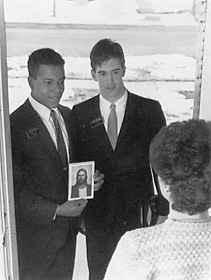
And so, just before I moved to Louisville, Kentucky to attend the Southern Baptist Theological Seminary, a friend of mine from Grace Heritage Church and I were trying to proclaim the gospel to a couple of Mormon missionaries at my home in Auburn, Alabama. Much of the terminology employed by these young men in describing their beliefs was very similar to language we Christians are familiar with, but when we questioned them carefully concerning their beliefs about God the Father and the Lord Jesus Christ, the vast gulf between our belief systems quickly became obvious. Denying the Holy Trinity, the Mormons were quite unwilling to repent of their theology unless we could fully explain the inner workings of the Godhead in intricate detail- a level of detail unnecessary for saving faith, and thus not provided by Scripture. [For God's Word is not given to satisfy every question of intellectual curiosity, but to make those who approach it in humility "wise unto salvation" (2 Tim. 3:15).] Dissatisfied by our responses, which included appeals to Deuteronomy 29:29 and Isaiah 55:9, the Mormon missionaries finally left, and the only apparent benefit that was given to them by this encounter is that now they hopefully understand why they cannot say that we believe in the same God or even the same Jesus, as they had asserted when we first began the conversation.

After they left, it occurred to me that while the Mormon missionaries had been presenting their view of who God is and how part of our salvation includes being made into gods, there were at least a couple of times when they were trying to think through some particular point and they had briefly (and, seemingly, subconsciously) began to trace through the air with their fingers. From what I knew of Mormon doctrine, I came to realize that what they were doing was visualizing the Mormon Plan of Salvation, which they had apparently seen depicted on a diagram somewhere, and they were trying to trace where what they were saying fit in on the chart. And I thought, 'It's no wonder that what we were saying about God and His Son seemed so incredibly baffling to them. Everything they believe is reducible to charts, and so it must seem so much more concrete than any talk about mystery or one Being in three Persons.' But as I thought further on this, I realized even more how the Mormons have been deceived by their theology. For they have made the fatal error of equating simplicity [in terms of 'ease-of-comprehending'] with truth. Now, if you are familiar with Mormon doctrine- with its presentation of Elohim living with his wives near the star of Kolob, etc., you may be surprised at this claim. Some of the Mormon beliefs seem fairly complex. But I'm talking about simplicity in comparison with the Scriptural presentation of the truth on subjects such as the nature of God, Christ, and Scripture, as presented at the beginning of this post. And so, for all of the structural complexity of the narrative presented in Mormon teaching, the actual basic doctrines of the Mormon church are easily and completely grasped once a person becomes familiar with the overarching story.


And here's where the Star Wars element of this post finally comes in. I own the original Star Wars trilogy on DVD. Now, I could watch Star Wars every day, read about these movies from books and on the Internet and come to a comprehensive knowledge of these movies. I could get to the point where I could beat anyone I knew at Star Wars Trivial Pursuit and I could answer any question anyone asked concerning the original trilogy. But for me to gain all understanding of these movies would not prove them to be true. In fact, my ability to gain comprehensive knowledge of these movies actually demonstrates that they are fiction. For the way that events unfold in reality often defies our ability to completely account why a particular set of circumstances came to pass. Especially as people are involved in history we begin to see that events involving true, personal relationships defy our ability to completely grasp them. In a good movie, the screenwriter must usually make sure that each character's motivation is clear, but how can we analyze and chart all the motivations that drive real people to act as they do?

And this is why the Christian message- a message of faith in Jesus that is so simple when people accept it in humility- is shown to be mysterious, complex, and incomprehensible upon further examination. For we are not presenting a set of facts, but a Person. We are not calling people to a simple formula or plan, but to a relationship with God Himself through Christ Jesus. And so we should not pridefully expect to fully understand Him or His ways, but we should joyfully anticipate learning more about our Merciful Savior throughout eternity.

Labels: , ,