Call To Die

Then [Jesus] said to them all, "If anyone wants to come with Me, he must deny himself, take up his cross daily, and follow Me. For whoever wants to save his life will lose it, but whoever loses his life because of Me will save it. (Luke 9:23-24, HCSB)

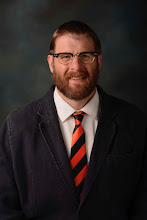
My Photo
Name:
Location: Louisville, Kentucky, United States

follower of Christ, husband of Abby, father of Christian, Georgia Grace, and Rory Faith, deacon at Kosmosdale Baptist Church, tutor with Scholé Christian Tradition and Scholé Academy

Wednesday, July 23, 2025

Theological Triage: A Proposal

Dr. R. Albert Mohler, Jr. is the ninth president of the Southern Baptist Theological Seminary–the flagship school of the Southern Baptist Convention (SBC) and one of the largest seminaries in the world. Dr. Mohler hosts two podcasts: “The Briefing” ("a daily analysis of news and events from a Christian worldview") and “Thinking in Public” ("a series of conversations with the day’s leading thinkers"). Dr. Mohler also serves as the Centennial Professor of Christian Theology at Southern Seminary, as the editor-in-chief of The Southern Baptist Journal of Theology, and the editor of WORLD Opinions. He has contributed to over 100 other published works.

[The above paragraph was adapted from the author's bio in He Is Not Silent: Preaching in A Postmodern World and from https://albertmohler.com/about/.]

One unique contribution that Dr. Mohler has made to theological discourse is coining the term "theological triage". Over the years, Dr. Mohler has explained this term in several places. For example in his 2008 book He Is Not Silent: Preaching in A Postmodern World, Dr. Mohler wrote:

As anyone who visits a hospital emergency room is aware, a triage nurse is customarily in place to make a first-stage evaluation of which patients are most in need of care. A patient with a gunshot wound is cared for ahead of a sprained ankle. This makes perfect sense, and indeed to ignore this sense of priority would amount to medical malpractice! In a similar manner, the pastor [/theologian] must learn to discern different levels of theological importance. I identify three distinct orders of doctrine in terms of importance.

Summary

Dr. Mohler writes that first-order doctrines are those "essential to the Christian faith"–denial of these doctrines will place a person outside of Christianity. Second-order doctrines are those "necessary for the ordering of the local church"–disagreement on these doctrines will make it "impossible to function together in a single local congregation". Third-order doctrines are "those that may be the ground for fruitful theological discussion or debate, but that do not threaten the fellowship of a local congregation or denomination."

More recently, Gavin Ortlund of Truth Unites has written Finding the Right Hills to Die On: The Case for Theological Triage (2020). Ortlund is explicitly indebted to Dr. Mohler's triage metaphor and categories, but he lists them a bit differently. He writes: 

First-rank doctrines are essential to the gospel itself. 

Second-rank doctrines are urgent for the health and practice of the church, such that they frequently cause Christians to separate at the level of local church, denomination, and/or ministry.

Third-rank doctrines are important to Christian theology, but not enough to justify separation or division among Christians.

Fourth-rank doctrines are unimportant to our gospel witness and ministry collaboration.

Ortlund's explanation of first-rank and second-rank doctrines tracks exactly with Dr. Mohler's first-order and second-order doctrines. Ortlund divides Dr. Mohler's third-order doctrines into two 'ranks'. Ortlund's motivation in this division seems to be ministry-driven; as a public theologian, Ortlund regularly engages in theological discussions and debates, so by categorizing some doctrines as "fourth-rank," he is able to better focus on first through third rank doctrines, while avoiding distractions by (at least relatively) unimportant doctrines.

Proposal

It may be the case that an additional "order" or "rank" is needed in this rubric of theological triage. In both Dr. Mohler's and Gavin Ortlund's explanations of second-order or second-rank doctrines, there seems to be the assumption that differences among these doctrines will cause Christians to separate into both different congregations and different denominations. However, it may be the case that some doctrines would cause Christians to separate into different congregations, while still allowing for denominational cooperation.

For example, 9Marks has published several articles and podcast episodes arguing against multi-site churches, or even against churches holding multiple parallel services on a weekend for congregants to choose from. (They argue that churches planting churches is the ecclesiologically healthier model.) There are many churches in the SBC that are influenced by 9Marks and that agree with the critique of the multi-site church model; however, there are other churches in the SBC which utilize the multi-site model or which have multiple parallel services on the weekend. Whereas a person with a conviction against multi-site churches could not become a member of a site in such a network, it seems that the SBC has been able to promote friendly cooperation between multi-site churches and those who object to the multi-site model. Therefore, it may be the case that among second-rank doctrines, there are some that are so serious as to distinguish different denominations and some that would distinguish different congregations within the denomination.

IF this division of second-rank doctrines is NOT valid (if every doctrinal distinction that would distinguish one congregation from another should also distinguish one denomination from another, and vice-versa), then there are several doctrines (like multi-site churches and the ordination of female deacons, to give another example) that the SBC needs to address at the denominational level.


Labels:

Monday, July 07, 2025

Conclave: Some Evangelical Thoughts

Conclave. Directed by Edward Berger. Screenplay by Peter Straughan. Based on the novel by Robert Harris. Focus Features: 2024. 

Edward Berger was born on March 6, 1970 in Wolfsburg, Lower Saxony, Germany. He is married to Nele Mueller-Stöfen. Before directing Conclave, which was nominated for the Best Picture Oscar, Berger gained international fame for writing and directing All Quiet on the Western Front (2022), which was also nominated for the Best Picture Oscar.

Peter Straughan was born on August 1, 1968 in Gateshead, Durham, England, UK. He was married to Bridget O'Connor until her death by cancer on September 22, 2010. Before writing the screenplay for Conclave, which won the Best Adapted Screenplay Oscar, Staughan gained international fame for co-writing the screenplay for Tinker, Tailor, Soldier, Spy, which was nominated for the Best Adapted Screenplay Oscar.

Robert Harris was born on March 7, 1957 in Nottingham, Nottinghamshire, England, UK. He is married to Gill Hornby. Before writing the novel Conclave, Harris gained international fame for his novels (known for heavily incorporating historical and political elements), and for working with Roman Polanski to adapt two of his novels–The Ghost Writer (2010) and An Officer and a Spy (2019)–into films.

[Some sentences from the above three paragraphs are taken directly from IMDB.]

The unique contribution of the film Conclave is its look behind the veil of papal politics, which–according to Cardinal Cormac Murphy-O'Connor–was largely accurate its details. Conclave–a movie about the death of a pope and the election of a new pope–was released on October 25, 2024, and Pope Francis was admitted to the Agostino Gemelli Polyclinic Hospital in Rome on February 14, 2025; this made Conclave seem particularly relevant at the 2025 Academy Awards (held on March 2). Conclave was released to streaming on April 22: the day after Pope Francis died.

Summary

According to the Focus Features official summary of the film:

Cardinal Lawrence (Ralph Fiennes) is tasked with running this covert process after the unexpected death of the beloved Pope. Once the Catholic Church's most powerful leaders have gathered from around the world and are locked together in the Vatican halls, Lawrence uncovers a trail of deep secrets left in the dead Pope's wake–secrets which could shake the foundations of the Church.

Some reviewers used the term "mystery" or "murder mystery" to describe the film, but these terms are misleading. The inciting incident (the death of the Pope) is not a mystery to be solved. The filmmakers do maintain a tension similar to a mystery film, and there are some surprises, but these are mostly political in nature.

Critical Evaluation

In a response to Conclave on twitter.com, Denny Burk noted:

Conclave aims to drive home one point: Doubt is a virtue, and certainty is a vice. The good guys are the liberals who always learn but never come to know the truth. The bad guys are the conservatives who think they know what is true.

Dr. Burk's point is certainly correct. In fact, the film does not even argue the 'one point' as much as it assumes that point and seeks to reinforce it through caricatures of conservatives. The filmmakers seem to assume that their audience will already agree with theological liberalism.

[Spoilers follow.]

The climactic plot point of Conclave, illustrating that "doubt is a virtue, and certainty is a vice" is the revelation that the ascendent pope is intersex: Cardinal Benitez (presented as a sympathetic, humble, and convictional person) is revealed to have been born with male external organs and internal female sex organs, with XX chromosomes. This is a highly unlikely scenario, as the presence of external male organs usually requires an XY chromosome structure, even in situations where other intersex features are present. However, there is an exceedingly rare condition called 'de la Chapelle Syndrome' that could result in symptoms such as those described by the fictional Cardinal Benitez.

In Conclave, the intersex condition is presented as allowing Cardinal Benitez to embody and live out the theme that "doubt is a virtue, and certainty is a vice" in a unique way. However, it is interesting to note that Cardinal Benitez's gender identity is not merely presented as a matter of personal feeling and choice. Benitez decides to forego having surgery to remove the internal female sex organs, stating, "I am what God made me," and Benitez seeks the counsel of the pope. The will of God and the authority of the head of the church are crucial in thinking through an unusual, complicated situation.

Conclusion

Thinking outside of the liberal Roman Catholic context presented by the filmmakers of Conclave, how should Evangelicals think through the theme and situation presented in the film?

Evangelicals believe that we have certainty concerning crucial matters of belief and life, not based on our own opinions, but based on God's revelation in the Bible. Because we live in a fallen creation, there are complicated situations that arise. We should not throw our hands in the air and conclude, 'There is no objective truth,' with life just being governed by our own individual feelings and choices. Instead, we should seek the will of God, as He has revealed it in the Bible. Evangelicals do not believe that there is any head of the church other than the risen Christ, so when we face unusual, complicated situations, we should seek the counsel of the gathered congregation of believers, praying to Christ and searching the Bible together.

To consider a point analogous to that presented in Conclave: say that in an evangelical church, there were an individual with an intersex condition, and that intersex individual was deciding whether the pursuit of pastoral ministry is appropriate. How should that intersex individual think through the issue? The most fundamental issue one must keep in mind is that what we are is defined by our Creator: "So God created man in his own image, in the image of God he created him; male and female he created them" (Genesis 1:27 ESV). Moreover, God defines leadership in the church; concerning pastoral ministry in the church, the Bible says, "I do not permit a woman to teach or to exercise authority over a man" (1 Timothy 2:12a ESV). Even in light of the complicated situation presented by an unusual intersex condition, church members should not reject the basic gender binary, nor should they reject the idea that only qualified men should be accepted for pastoral ministry.

Given these principles, an intersex individual who is trying to decide whether to pursue pastoral ministry would want to have as much information as possible. Chromosome testing, if available–to provide additional objective evidence, informing the perception of one's identity–may be useful. An intersex individual, like anyone else, would seek answers from the Bible. Since many intersex conditions–like 'de la Chapelle Syndrome'–result in the individual being sterile, passages such as Matthew 19:11-12, in which Jesus discusses those who are 'eunuchs from birth,' may be relevant. Finally, an intersex individual should seek counsel from other Bible-believing brothers and sisters in Christ, looking for help within a spiritually healthy local church, in order to discern the will of Christ.


Labels: ,

Friday, May 16, 2025

Daily Doctrine by Kevin DeYoung: An Appreciation and Critique

DeYoung, Kevin. Daily Doctrine: A One-Year Guide to Systematic Theology. Wheaton, IL: Crossway, 2024. 

Kevin DeYoung presently serves as the senior pastor of Christ Covenant Church in Matthews, North Carolina, and as an associate professor of systematic theology in Charlotte, North Carolina. In 2008, DeYoung's book Why We're Not Emergent: By Two Guys Who Should Be, written with Ted Kluck, brought him to national attention within Reformed and evangelical circles. Since then, DeYoung has written books for children, adults, and academics, including Just Do Something, Impossible Christianity, and The Biggest Story Bible Storybook. DeYoung has been a blogger for The Gospel Coalition website, and he was one of the featured speakers at the biennial Together for the Gospel Conference from 2012-2022.

The unique contribution of Daily Doctrine: A One-Year Guide to Systematic Theology is its format: this systematic theology is broken into 260 daily readings, each between a page to a page-and-a-half in length. (DeYoung intentionally made the number of readings less than the days of a calendar year, so that readers could skip weekends or otherwise catch up on missed entries to still complete the book in a year.)

Summary

On pages 8-9, DeYoung writes:

Traditionally...systematic theology has been comprised of seven main topics: prolegomena (literally "first words," where ground rules and the doctrine of Scripture are usually covered); theology proper (covering the doctrine of God, the Trinity, the decrees, creation, and providence); anthropology (the doctrine of man's creation and fall); Christology (the person and work of Christ); soteriology (how we are saved and how saved people live by the Spirit); ecclesiology (the doctrine of the church); and eschatology (the doctrine of last things, both personally and cosmically).

DeYoung follows this traditional structure, except that he adds a section on Covenant Theology after his section on Anthropology, and he divides Christology into two sections: one for the person of Christ, and one for the work of Christ. So the parts of Daily Doctrine are:

Prolegomena: Preliminary Considerations and Doctrine of Scripture

Theology Proper: The Being of God and the Works of God

Anthropology: Man as Created and Fallen

Covenant Theology: How God Relates to His Creatures

Christology 1: The Person of Christ

Christology 2: The Work of Christ

Soteriology: The Doctrine of Salvation

Ecclesiology: The Nature, Mission, and Ordering of the Church

Eschatology: Last Things

Critical Evaluation

DeYoung does an excellent job presenting a systematic study of theology in a clear and concise manner. Though intended to serve "pastors, students, leaders, and laypeople" alike, in this book, DeYoung does not shy away from using technical language, including distinctions like anhypostasia versus enhypostasia (terms I did not learn until I was in seminary) and archetypal theology versus ectypal theology (terms I did not learn until well after I left seminary). Because it is both brief and technical, this book may be of better service to those who have had at least a survey of systematic theology, rather than complete beginners to the subject.

Though intended to serve the church as a whole (and–in many ways–accomplishing this goal admirably), DeYoung's teaching in Daily Doctrine is from a specifically Presbyterian perspective. This is especially evident in certain entries within his sections on Covenant Theology and Ecclesiology. Unsurprisingly, a Reformed Baptist reader will have objections with some statements in these sections.

In his section on Covenant Theology, DeYoung devotes two daily readings to views that differ from his own: Dispensationalism and Baptist Covenant Theology. From a Reformed Baptist perspective, the entry explaining and critiquing Dispensationalism is commendable. A Reformed Baptist may also express thanks to DeYoung for the entry on Baptist Covenant Theology, at least for his acknowledgment of the existence of Baptist Covenant Theology–often overlooked by paedobaptist covenant theologians–and his fairness in using terms that Baptist covenant theologians would accept when explaining our position. DeYoung spends half of his entry on historic Baptist Covenant Theology–the theology following the 1689 Baptist Confession of Faith–and the other half of that entry on "progressive covenantalism," and uninformed readers might not be able to understand the nuances between these views from DeYoung's brief entry, but this is understandable considering the significant overlap in the two Baptist views, especially in considering the newness of the new covenant.

In offering a critique to Baptist Covenant Theology's view of the new covenant, DeYoung writes:

[W]e might ask whether the establishment of the new covenant moves us, in God's redemptive economy, from a mouse to a cat or from a puppy to a dog. The nature of the covenant community, the recipients of baptism, and the way in which the church becomes visible...are all related to the question of whether the new covenant is fundamentally different or the same essential thing brought to fullness and completion. [Paedobaptist] Covenant theology answers this question by seeing the new covenant as a grown-up dog, not a different animal entirely.

Notice that if in DeYoung's analogy dog = covenant, then there is no new dog in his analogy. If a parent told a child with a puppy, "We're going to get you a new dog in three years," then–after three years–the parents pointed to the grown-up dog and said, "There's the new dog we promised." The child would rightly feel deceived. DeYoung is basically saying that the new covenant is not a new covenant.

But notice how Scripture describes the new covenant. In Jeremiah 31, the LORD says that the new covenant is "not like the covenant that I made with their fathers on the day when I took them by the hand to bring them out of the land of Egypt" (Jer 31:32a). Explaining Jeremiah's prophecy, the author of Hebrews does not only call the new covenant "new," but also "second" and "better," since the new covenant is "enacted on better promises" (Heb 8:6). The Spirit-inspired author of Hebrews does not say that the old covenant simply matures, but that it is faulty, obsolete, and vanishing away (Heb 8:7-13). The text could hardly be clearer about the essentially different nature of the new covenant.

Conclusion

In many ways, Daily Doctrine is a helpful resource for those who would like daily help to grow in loving the Lord with all of our minds. It would be a great resource to give to graduates of a Christian high school or Bible college: those who have received some theological education and would benefit from having that doctrinal consideration sharpened. However, a Reformed Baptist giving this book as a gift would want to make sure that the recipient is quite clear on the nature of the new covenant, so that DeYoung's paedobaptist Covenant Theology would not have a negative effect on church membership and future family decisions.


Labels: ,

Thursday, July 25, 2024

Andy Stanley on the Bible

Among the points that he made in his June 30, 2024 message "Broken and Grateful," Andy Stanley–founder and preacher for the North Point Ministries megachurch network–taught the following: 

1. The Bible is a collection of books, rather than a single book.
2. The authority of the Bible is less than the authority of Christ.
3. The Old Testament is for historic Israel, not for the Church.

To address each of these in turn:

1. The Bible is a collection of books, rather than a single book.

Recognizing the Bible as a collection of books–with various writing styles and points-of-view from various authors–is not wrong, but the fundamental unity of the Bible should not be downplayed. And it seems that Stanley is trying to downplay the unity of Scripture. Regarding the canon of Scripture, Stanley asserted:

This statement ['all authority in heaven and on earth has been given to me'] has been reduced to simply another statement or another verse in the Bible–equated with every other statement or verse in the Bible–and that is tragic, because Jesus said this 300 plus years before the first Bible was ever assembled.

In response to this, we should note:
- Obviously, the Old Testament was already assembled before the time of Christ, and it was cited by Christ as Scripture.
- Even while the New Testament was still being written, we see writings of the New Testament being accepted as having canonical status. This is evident in Paul's quotation from the Gospel of Luke along with Deuteronomy, found in 1 Timothy 5:17-18 and in Peter's reference to Paul's writings as Scripture in 2 Peter 3:15-16.
- Historian W.H.C. Frend notes that the collection of the four gospel accounts and the Apostle Paul's epistles were commonly used in Church worship–being understood to have divine authority–by about A.D. 80.

Therefore, we see that the canon was largely recognized long before the time-frame Stanley seems to indicate.

Stanley's placing the 'assembly' of Scripture at a late date is done in service of seeing the Bible as fragmentary, rather than unified. And seeing the Bible as fragmentary, rather than unified, is done in service of his next (and main) point:

2. The authority of the Bible is less than the authority of Christ.

Regarding the authority of the Bible vs. the authority of Christ, Stanley asserted:

If you use this language [because "the Bible" is a term invented by men long after Matthew wrote this passage]: the Bible says that Jesus is our ultimate authority, not the Bible.

The words and works of Christ, recorded in the Bible, bring clarity to the rest of the Bible. The types and shadows of the Old Testament become clear in Christ. The way that the Old Testament should be applied (and should not be applied) within the Church is set forth in how Jesus referred to the Old Testament. 

However, to set the authority of Christ against the authority of Scripture is unChristlike. When overcoming the temptations of Satan, Jesus appealed to the authority of Scripture, and the devil's erroneous use of Scripture did not cause Jesus to switch to another strategy (see Matthew 4:1-11). When answering the Pharisees' erroneous views of divorce, Jesus appealed to the authority of Scripture, and the religious leaders' erroneous use to Scripture did not cause Jesus to switch to another strategy (see Matthew 19:1-9). When explaining His death, burial, and resurrection to His followers, Jesus took them to the Scriptures (see Luke 24:26-27).

The apostle Paul, commissioned by Jesus, taught,

"All Scripture is breathed out by God and profitable for teaching, for reproof, for correction, and for training in righteousness, that the man of God may be complete, equipped for every good work" (2 Timothy 3:16-17 ESV).

It is Scripture that allows the man of God to "be complete, equipped for every good work". Considering Scripture as a whole, it is Scripture that allows us to know the words and (specific) works of Christ. As the Apostle Paul wrote to Timothy, the New Testament had not yet been completed, and so the primary idea of "Scripture" for him would have been the Old Testament. The Old Testament is "profitable for teaching, for reproof, for correction, and for training in righteousness". And this brings us to Stanley's next point:

3. The Old Testament is for historic Israel, not for the Church.

In addition to the way "Scripture" is used in 2 Timothy 3:16-17, the Apostle Paul wrote:

"For whatever was written in former days was written for our instruction, that through endurance and through the encouragement of the Scriptures we might have hope" (Romans 15:4 ESV, emphases added).

Earlier in Romans, quoting from Genesis 15:6 ("Abram believed the LORD, and it was credited to him as righteousness"), the Apostle Paul noted:

"But the words 'it was counted to him' were not written for [Abram's] sake alone, but for ours also. It will be counted to us who believe in him who raised from the dead Jesus our Lord" (Romans 4:24 ESV, emphases added). The Old Testament shows us that righteousness was always imputed to God's people through faith alone.

Applying a specific verse from the law of Moses (“You shall not muzzle an ox when it treads out the grain”), the Apostle Paul wrote:

"Does he not certainly speak for our sake? It was written for our sake" (1 Corinthians 9:10a ESV).

The Old Testament is a book for the Church, better understood by those who read it after the promised Messiah has come. Parts of the Old Testament scriptures are applied to the Church in different ways than they would have been applied to national Israel. The sacrificial system has been fulfilled in Christ, who is the final, perfect sacrifice, so we no longer keep the ceremonies of Old Testament worship. We are not under the same governmental structure as Israel was in Old Testament times, so we look to the principles of the law to guide our decision-making, without necessarily trying to implement details of the Old Testament law. However, there are moral laws (especially in the Ten Commandments) that are repeated verbatim as still binding upon people in the New Testament era (see Ephesians 6:1-3).

The Church must not "unhitch" from the Old Testament (as Stanley has previously asserted); rather, we should look to the Bible to see how the Old Testament should be applied in light of the completed work of Christ.

Labels:

Sunday, June 16, 2024

Is Genesis Literal or Allegorical? - Dr. Mitchell Chase

Labels: ,

Saturday, February 03, 2024

Afterlife and Resurrection: Biblical Beliefs from the Beginning, According to Jesus

Leading "Jesus Seminar" member John Dominic Crossan argues that Jewish belief in an afterlife originated after the close of what we know as the Old Testament canon, concluding, “So belief in life after death has certainly not always been a part of biblical faith” [Crossan. Who Is Jesus? (Westminster: John Knox Press, 1996), 131].

But this statement is clearly seen as false when one examines the actual biblical text.

For in the second book of the Bible we read the recorded words of God to Moses, “I am the God of thy father, the God of Abraham, the God of Isaac, and the God of Jacob” (Exodus 3:6 KJV). God here uses the present tense “I am” when speaking of men whom Moses knows to be long deceased. And so, if God is presently the God of these men when speaking to Moses, it is clear that these men are yet, in an entirely real sense, still alive, for God is not claiming to be a god over now-inanimate matter, but over living individuals.

This is not my argument, but rather the argument of Jesus Himself, as seen in the following passage:

On that day some Sadducees (who say there is no resurrection) came to Him and questioned Him, saying, "Teacher, Moses said, `If a man dies, having no children, his brother as next of kin shall marry his wife, and raise up an offspring to his brother.'
"Now there were seven brothers with us; and the first married and died, and having no offspring left his wife to his brother; so also the second, and the third, down to the seventh. And last of all, the woman died.
"In the resurrection therefore whose wife of the seven shall she be? For they all had her."
But Jesus answered and said to them, "You are mistaken, not understanding the Scriptures, or the power of God. For in the resurrection they neither marry, nor are given in marriage, but are like angels in heaven.
"But regarding the resurrection of the dead, have you not read that which was spoken to you by God, saying, `I am the God of Abraham, and the God of Isaac, and the God of Jacob'? He is not the God of the dead but of the living."
And when the multitudes heard this, they were astonished at His teaching.
But when the Pharisees heard that He had put the Sadducees to silence, they gathered themselves together. (Matthew 22:23-34 NASB)

The Pharisees were silenced at Jesus’ teaching on the resurrection. The question is, will Crossan display this same kind of common sense in light of the authority of Jesus, or will he persist in railing against the plain teaching of God’s Word, continuing to attack the doctrine of the resurrection with charges that have already been sufficiently answered by our Lord?

[This blogpost was originally published on 8/24/05 under the title, "A Simple Contradiction."]

Labels:

Thursday, January 11, 2024

Some Reasons to Deny the Physical Presence of Jesus' Body in the Elements of the Lord's Supper

And when He had taken some bread and given thanks, He broke it and gave it to them, saying, "This is My body which is given for you; do this in remembrance of Me." And in the same way He took the cup after they had eaten, saying, "This cup which is poured out for you is the new covenant in My blood. (Luke 22:19-20 NASB)

In general, the faithful Christian should be cautious about taking any kind of "just me and my Bible"
approach to forming convictions concerning the Faith. The Lord Jesus established a community of believers and He appointed teachers within that community. We should have humility to learn from the past generations of the faithful.

On the other hand, Christians who self-consciously hold to the principles of the Protestant Reformation must declare that the Bible is necessary, authoritative, sufficient and clear: Scripture alone is the final authority regarding matters of faith and practice. Other authorities are composed of men who are fallible and subject to error, while God's Word is perfect (cf. Psa 19:7): infallible and inerrant.

And so, though major streams of religious tradition that self-identify as "Christian"–and, indeed, perhaps the majority of actual followers of Christ throughout the ages–have believed that the physical body and blood of the glorified Christ are somehow present in the elements of the Lord's Supper, the first and foremost examination regarding this issue should not take place on the basis of human history books or opinion polls, but on the basis of the biblical data.

In regard to the words from Jesus, quoted above, one must note:

1. Jesus does not use the verb "become," but the simple verb "to be" [in this case, "is"].
2. In other passages, Jesus uses the verb "to be"in ways that are clearly metaphorical–ways in which "become" clearly cannot be supplemented to it–no one, for example, argues that Jesus became a literal door when He declared "I am the door" (John 10:9).
3. Likewise, in Luke 22:20 (repeated in 1 Corinthians 11:25), the words “This cup which is poured out for you is the new covenant in My blood” cannot be taken literally, “for clearly the cup itself is not actually the new covenant;” “Paul means, rather, that the cup represents the new covenant inaugurated by Christ’s blood. Similarly, when Jesus says that the bread 'is My body,' it likely means that it represents what Christ has done on behalf of the church through his sacrifice." (Schreiner, New Testament Theology)
4. In reviewing Jesus' institution of the Lord's Supper in 1 Corinthians 11:23-26, the Apostle Paul quotes Jesus as twice saying: "Do this in remembrance of Me." This seems to point to the character of the Lord's Supper, not as a partaking in ingesting the physical body and blood of Jesus, but as a memorial feast, antitypical of the Passover (see below).
5. The Lord's Supper clearly has its background in the Passover: in the Passover there is no thought of the bread and wine becoming the body and blood of the sacrificial lamb.
6. In the cultures to whom the Gospels and Epistles were addressed (note Paul's comparison between the Lord's Supper and idol feasts, 1 Cor 10:21), there was no thought of the elements in religious feasts becoming the physical body and blood of a deity/religious figure.
7. If the Lord's Supper was meant to involve the physical presence of the body of Jesus in the elements, therefore, this aspect of the Lord's Supper would be a point of explicit contrast to both the Passover and to idol feasts; in order to make this point of contrast clear to the earliest church, more explicit instruction would be required from the apostolic writings.

Traditions that teach the physical presence of Jesus' body in the elements invariably neglect the implications of the fact that the glorified Christ is currently seated at the right hand of the majesty on high, having completed His gospel work once and for all (cf. Psa 110:1; Heb 1:3; 7:27; 10:10-14), and they make the Lord's Supper not just a crucial corporate proclamation of the gospel, but a part of a gospel-obscuring (at very best) sacerdotal system.

[See:

Peter Gentry, “The Lord’s Supper BF&M Article 7b,” An Exposition from the Faculty of the Southern Baptist Theological Seminary on the Baptist Faith and Message 2000 (Louisville: The Southern Baptist Theological Seminary, 2001), 25-28.

Thomas Schreiner, New Testament Theology: Magnifying God in Christ (Grand Rapids: Baker, 2008), 730-734.]

Labels: , ,

Thursday, January 04, 2024

Sermon Notes on "Why Am I Baptist?" by Tray Earnhart

[The were taken on February 20, 2011, at Kosmosdale Baptist Church.]

I. Introductory Question/Observations:
A. Question: in 1 Cor 3:1-9 is Paul prohibiting labels like "Baptist?"
B. Observations:
1. Many people define "Baptist" by what we do (or what we do not do).
2. Our first allegiance is to be to Christ and His gospel.
3. Denominations can be good and can help a local church to avoid confusion in worship.
4. If we believe another denomination is more biblical, we should leave Baptist life and join with that other denomination.

II. 8 Reasons Why I'm Baptist:
[Tray noted that these reasons are not original to him, but are drawn from a variety of sources. The first reason is foundational, and the second is what most easily distinguishes Baptists, but otherwise Tray said these are not presented in any particular order.]
1. Our view of Scripture: 2 Timothy 3:16-17.
2. Believers' baptism by immersion: Acts 18:8, belief precedes baptism.
3. Regenerate church membership: because the purity of the church is at stake (Ephesians 5:25-27).
4. The priesthood of believers.
5. Local church autonomy.
6. Evangelism and missions.
7. Confessions.
8. Religious liberty.

III. Additional Notes:
A. The above reasons focus on who we are, not just what we do, though who we are impacts what we do.
B. It is important to note that you can be a Christian and not be a Baptist; likewise, you can be a Baptist and not be a Christian.

-Turn to Christ today.

Labels: ,

Friday, November 03, 2023

In Defense of Christ's Bride

Introduction: David Miller

David Miller, a long-time evangelist, was one of the trustees for the Southern Baptist Theological Seminary (SBTS) in the midst of the Conservative Resurgence when Dr. Albert Mohler came into office as President of SBTS. Each time that I have heard him speak–during some chapel messages at SBTS, during some plenary sessions at the G3 Conference, during some question and answer sessions, and during some interviews–David Miller has displayed godly wisdom and a passion for Christ and His gospel. I have definitely heard David Miller give clear gospel presentations, proclaiming the good news of justification by faith alone in Christ alone in a compelling way, and I am truly thankful for his witness to the Lord. In many ways, David Miller is an awesome man of God. David Miller deserves respect. I do not want the rest of this post to take away from this point.

HOWEVER, I do think that David Miller, within Baptist circles, is an example of someone who has been known to promote what is known as Landmark doctrine, which includes a denial of the universal Church. I believe that it is important for Baptists to understand Landmarkism and to be ready to give a response.

In a sermon preached on September 20, 2007 at the Southern Baptist Theological Seminary chapel service (I happened to be in attendance that day, and the audio is available HERE), David Miller ridiculed the idea of the universal church as follows:
Did any of you ever know of a universal, invisible body? Did you ever know of a universal, invisible building? Did you ever know– and may the Lord have mercy upon the poor fellow who marries a universal, invisible bride. I don’t know about you, brethren, but I like something more tangible in a bride. Sophisticated academic credentials just are not required at this point, to conclude that when the Bible talks about the church, it’s not talking about some universal, invisible entity; it’s talking about a local, visible congregation. I like to ask my friends who believe in the universal church: where does your church meet? And who is its pastor? Benny Hinn? And who receives its tithes and offerings? And what are its missionary, educational, and evangelistic enterprises? Oh, no: the church is local and visible.
At the 2014 G3 Conference (which I also happened to attend, and which had "The Church from a Biblical Perspective" as its topic), David Miller delivered similar words against the doctrine of the universal church, arguing that the church is ONLY present in its local expression.

When Miller spoke of “sophisticated academic credentials”– coupled with a statement earlier in his sermon about Baptist thinking concerning the church “now days”– he sought to give the impression that the idea of a universal, invisible church is a modern invention of academics, heretofore unknown in Baptist life. But the doctrine of the universal church has a long history: indeed, one stretching back to the Bible. Baptists should confess the doctrine of the universal church for three reasons: Baptist confessions of faith teach this doctrine, the Bible teaches this doctrine, and there are serious implications for denying this doctrine.

The Universal Church in Baptist Confessions of Faith

The first reason Baptists today should joyfully and confidently confess the doctrine of the universal church is that Baptist confessions of faith teach this doctrine. Baptists have historically affirmed the universal Church. This is demonstrated in many Baptist confessions of faith, including the Second London Baptist Confession, the Abstract of Principles, and the Baptist Faith and Message.

1. The Second London Baptist Confession (2LBCF, often called the "1689," for when it was adopted by a Baptist General Assembly of churches in London) was the confessional statement of the church or association of every one of the 293 delegates who gathered in Augusta, Georgia, to organize the Southern Baptist Convention in 1845”, and it is still used by many Reformed Baptist congregations. The 2LBCF begins Chapter 26 (“Of the Church”) with the statement:
The catholic or universal church, which (with respect to the internal work of the Spirit and truth of grace) may be called invisible, consists of the whole number of the elect, that have been, are, or shall be gathered into one, under Christ, the head thereof; and is the spouse, the body, the fulness of him that filleth all in all.
2. The Abstract of Principles, used as the doctrinal standard at SBTS (where Miller was a trustee) since 1858 and quoted approvingly by Miller in another venue, declares that the Church is composed of all Christ's true disciples, distinguishing between "the Church" [capital "C"] and "particular societies or churches."

3. The Baptist Faith and Message 2000, the confession of faith for the Southern Baptist Convention, declares that in addition to local congregations of baptized believers: 
The New Testament speaks also of the church as the Body of Christ which includes all of the redeemed of all the ages, believers from every tribe, and tongue, and people, and nation.
The doctrine of the universal church is not just some "now days" invention of an academic elite, it is a teaching that is represented in foundational Baptist confessions of faith.

The Universal Church in the Bible

The second reason 
Baptists today should joyfully and confidently confess the doctrine of the universal church is that the Bible teaches this doctrine. As important as it is to learn from voices in church history, the Bible was given by inspiration of God, and it is infallible and inerrant, being the sufficient, final arbiter of all disputes concerning matters of life and godliness (2 Tim 3:16-17). Concerning the universal church, all of the Bible texts cited as proofs in the Baptist confessions should be examined, including Hebrews 12:23, Colossians 1:18, and Ephesians 5:23.

1. Hebrews 12:23 speaks of "the church of the firstborn, whose names are written in Heaven."

2. Colossians 1:18 speaks of Christ being "the Head of the Body, the Church."

3. Ephesians 5:23 (coming after the Holy Spirit in the previous chapter- 4:4- had declared that there is "one body") again speaks of Christ as the head of the Church calling the Church "His body, of which He is the Savior."

As noted by the great Baptist theologian J.L. Dagg in Chapter 3 of his Manual on Church Order, none of these verses can carry the meaning of a single, local, visible congregation. Christ is the Savior of His Church alone; He is the Savior of all who are in His Church. Baptists, Presbyterians, or the man on the island who gets saved from a Bible washing up on the beach: anyone who trusts in Christ is a part of His body and His bride.

Miller asserted (on this subject) that the Bible speaks of a “glory church” that “does not yet exist,” but will exist in Heaven. It is this church, he says, that we should understand Ephesians 5:25-27 indicates in speaking of the church as Christ’s bride. Miller states: “Even that glory church is going to be local and is going to be visible.”

To this, I would simply assert that the “glory church” already exists, though it is not yet fully revealed (1 John 3:2). The “glory church” in Heaven is not some different body of Christ, for there is “one body” (Eph 4:4), and all believers are already counted as being seated with Christ in the heavens (Eph 2:6).

Some Implications of Denying the Universal Church

The third reason Baptists today should joyfully and confidently confess the doctrine of the universal church is that there are serious implications for denying this doctrine. Denying the doctrine of the universal church has implications for the salvation of non-Baptists, for the confidence of Christians scattered due to persecution, and for the faithfulness of Christ to His bride. 

1. Denying the universal church has implications for the salvation of non-Baptists. Miller and others who hold to Landmarkism, denying the universal church, define local churches in a baptistic manner. This leads to the inevitable conclusion that EITHER no-one other than Baptists are saved (I once heard this explicitly proclaimed when visiting a Baptist church in south Georgia that turned out to be a Landmark congregation) OR people who remain in other denominations while believing in Christ ARE saved, but they are NOT a part of the Church. Neither of these positions are tenable.

2. Denying the universal church has implications for the confidence of Christians scattered due to persecution. If universal persecution breaks out and all Christians are scattered, then Christ would have no body or bride upon the earth. NOTE: this is not merely a hypothetical situation. In the apostolic age and during the systematic persecutions of the Church in the Roman Empire, the Church was scattered. But Christ says that the gates of Hell will not prevail against the Church. His body and bride remains even if all church doors are closed.

3. Denying the universal church has implications for the faithfulness of Christ to His bride. A denial of the universal Church makes Christ a polygamist. If there is not one single Bride composed of the elect of all ages–if the church only exists as local expressions of various churches–then Christ has brides scattered throughout the globe. Again, this position is untenable.

Baptists are not the only Christians, and Christians outside of Baptist church membership rolls are still members of the Church: Christ's body and bride. Christians scattered by persecution are still part of Christ's body and bride; the gates of Hell will not prevail against the Christ's body and bride. Christ is not a polygamist; rather, He is a faithful husband to a single Bride: His elect from all nations.

Conclusion

Baptists today should joyfully and confidently confess the doctrine of the universal church for (at least) three reasons: Baptist confessions of faith teach this doctrine, the Bible teaches this doctrine, and there are serious implications for denying this doctrine. In his teaching about the church, David Miller has asserted that we do not teach enough about the nature of the church. In this assertion, he is correct. HOWEVER, the appropriate correction for this problem is to turn to 9Marks or some very similar resource. It is NOT appropriate to hyper-correct a lack of ecclesiology by turning to a Landmarkist denial of the universal Church. Landmarkism leads to terrible implications, it is denied by the Baptist confessions of faith, and it is not in line with Scripture.

Labels: ,

Thursday, August 31, 2023

"Inclusivism"=The Death of Missions

In a blogpost published on March 10, 2011, Kevin DeYoung gave an excellent exegetical argument from John 14:6 arguing that, especially in the context of the entire Gospel of John, Jesus certainly taught the necessity of faith in Him for salvation. [See DeYoung's post HERE.]

In the original comment section from DeYoung's blogpost mentioned above, someone called "Spera in Deo" attempted to defend inclusivism. Spera defines inclusivism as "Hope for the Heathen" and explains the inclusivist view of what Jesus taught as follows:
Hope for the Heathen Jesus (HHJ): Jesus believed that while God would save some A.D. adults [adults living after the coming of Christ] who do not believe that Jesus is the Son of God (perhaps because they never even heard the gospel message), he also believed that the only way for an A.D. adult who heard the gospel message to be saved by God is for that adult to believe that Jesus is the Son of God.
I responded to the above comment from Spera with the following:
Doesn’t this thinking inevitably lead to the conclusion that the LAST thing that Christians would want to do is to go on missions to tell “unreached” people the gospel message? Because under the model you have proposed, it is only once the “A.D. adult” has heard the gospel message that his or her options for salvation are narrowed down to the exclusive way in Christ. And those who have never before heard the gospel would seem far more likely to reject this teaching and stick with their own system of belief (under which they might have been saved if they hadn’t heard the gospel, according to the inclusivist), therefore the “good news” wouldn’t be the only hope of salvation as much as the unique source of damnation.
If those who have not yet heard the gospel may be saved under their own belief system–the belief system (in all likelihood) of their countless ancestors, the belief system in which they may very well find a high degree of comfort and assurance–as long as they do not know about the Jesus they are missing, then the gospel becomes very bad news indeed.

But the truth is that we are all by nature children under wrath (Eph 2:1), rebels against our Creator, and subject to the punishment of Hell. The reason the gospel is "good news" is because out of this hopeless situation God in Christ has provided redemption through His perfect life, death, burial, and resurrection on behalf of sinners.

Labels: ,

Thursday, August 10, 2023

Colbert and Gervais on Theism: Two Initial thoughts

Recently, I saw this six year old video of Ricky Gervais and Stephen Colbert discussing belief in God (or lack thereof).

Concerning this video, I had two initial thoughts:

1. Notice how quickly Gervais dismisses the question "Why does the universe exist?" substituting the question "How does the universe exist?" changing the focus from one of meaning to a mere mechanical account. Throughout history, philosophers have pondered the meaning of the universe. The assumption that Gervais brings to the table (shared by many today) is that the universe has no meaning. This assumption should be questioned, with the impossibility of consistently living according to this assumption pointed out.

2. Gervais uses the old atheistic talking point of saying, 'You deny a multitude of gods; I just deny one more god than you do.' This is equivocation. "God" can be used in general of an unseen higher power, but the attributes of YHWH, as presented in the Bible, are fundamentally different than the attributes of the gods in false religions. What a Christian denies when he or she denies the sexually immoral Zeus of Greek myths, the pantheistic Brahman of Hinduism, or the utterly mysterious 'God dynamic' of Scientology is in no way similar to what an atheist denies when he denies the true God, who is the Sovereign Creator and Sustainer of all things, the Holy Lawgiver and Judge over creation, and the Merciful Redeemer and Lord for all those who believe.

Labels:

Thursday, April 20, 2023

Does Calvinism/Reformed Theology Teach That God is the Author of Sin?

In an article titled "Refuting What Calvinists Believe with What Calvinists Know," Dr. Patrick Johnson, seeking to contend against Calvinism, begins his explanation of Calvinism with the following statement: "Calvinism teaches that God is the author and Creator of sin." Dr. Johnston cites no source for this statement, but he is certainly wrong. The Westminster Confession and Second London Baptist Confession (documents whose authors/editors were self-consciously in the Calvinist or Reformed tradition) plainly assert, "God, who, being most holy and righteous, neither is nor can be the author or approver of sin" (this quote is from Chapter 5, Paragraph 4 in each confession).

Calvinism/Reformed Theology, in accordance with Scripture, teaches that while God is sovereign over all things (including sin), He neither authors nor approves sin. This teaching is seen in three biblical examples:

1. Joseph and his brothers,

2. Jerusalem and Assyria, and

3. Jesus and those who crucified Him.

Defending Dr. Patrick Johnson's article, an anti-Calvinist friend of mine first charged the Reformed Confessions with self-contradiction (since they say that God decrees everything that happens), then he brought forth the following quotes from John Calvin's Concerning the Eternal Predestination of God:

Certain shameless and illiberal people charge us with calumny by maintaining that God is made the author of sin, if His will is made first cause of all that happens. For what man wickedly perpetrates, incited by ambition or avarice or lust or some other depraved motive, since God does it by his hand with a righteous through perhaps hidden purpose--this cannot be equated with the term sin.

Must we then impute the guilt of sin to God, or invent a double will for Him so that He falls out with Himself? I have shown that He wills the same as the criminal and the wicked, but in a different way. So now it is to be maintained that there is diversity of kinds while He wills in the same way, so that out of the variety which perplexes us a harmony may be beautifully contrived.

While those who hold to the Westminster Confession and the Second London Baptist Confession do not necessarily feel obligated to agree with everything written by John Calvin (Baptists in particular object to Calvin's doctrine of baptism, his ecclesiology, and his view on church/state relations), Calvin's teachings on subjects such as predestination have certainly been influential among those holding to these confessions, so quotes from him on this subject are clearly relevant.

But notice what Calvin says (and what he does NOT say) in the quotes above. In the first sentence quoted, Calvin is denying, not affirming, that God is "the author of sin." His opponents charged that the outcome of his exegesis was that God would necessarily be seen as the "author of sin," but Calvin denies that this is an implication of his teaching. In the second sentence quoted, Calvin denies that God contains a "double will" of such a nature that "He falls out with Himself;" this is the main point that Calvin is defending in the passage cited: that God is NOT like the "double minded man" of Jas 1:8. There is "diversity of kinds" regarding the way in which God–who is in control of all things, never out of control–wills what comes to pass. This "variety... perplexes us," but everything finds "harmony" in God, who works all things together for the good of those who love Him, who are called according to His purpose (Rom 8:28).

In these passages and others, Calvin is affirming the same doctrine found in the Westminster Confession and Second London Baptist Confession, mentioned above: that God is NOT the author or approver of sin AND that God's will is the "first cause of all that happens."

That God is sovereign over all things, yet neither the author nor approver of sin is seen in the lives of Joseph and his brothers. As recorded in Genesis 50:20, Joseph tells his brothers, "[Y]ou meant evil against me, but God meant it for good, to bring about that many people should be kept alive, as they are today." Joseph does NOT say, 'You meant evil against me, but God didn't mean for that to happen.' Instead–in regard to the very same activity–there were two kinds of intentions at work: the brothers' intentions, which were truly evil, and God's sovereign intention, which was truly good.

That God is sovereign over all things, yet neither the author nor approver of sin is seen in the experience of Jerusalem and Assyria. In Isaiah 10:5-7; 12, God calls Assyria "the rod of My anger" and foretells that He will use this "rod" to punish Jerusalem, yet He also says that He will punish Assyria, because–while God's sovereign intention in the matter is entirely righteous–the king of Assyria is characterized by "pomp" and "haughtiness." Again, in regard to the very same activity–Assyria's military action against Jerusalem–there were two kinds of intentions at work: the Assyria's intentions, which were truly evil, and God's sovereign intention, which was truly good.

Finally and chiefly, that God is sovereign over all things, yet neither the author nor approver of sin is seen in the experience of Jesus and those who crucified Him. NO aspect of Christ's suffering was a surprise to God nor outside of God's control. God's hand and His purpose predestined everything that occurred on that glorious and awful day (Acts 4:28). Yet "Herod and Pontius Pilate, along with the Gentiles and the peoples of Israel" (Acts 4:27) perpetrated great wickedness against Jesus. This wickedness was according to God's decree, but God committed no act of wickedness in it: the fault was all on the part of the sinners.

This teaching–that God is sovereign over all things, yet neither the author nor approver of sin is important to each one of us, as we realize that we are all sinners in need of a Savior and that our salvation is entirely dependent on God's grace. When we sin we can blame no one but ourselves; we can never claim "God made me do this." When we are saved we can give credit to no one but God Himself; we can never claim "I contributed to this."

Labels: ,

Thursday, February 09, 2023

Tendencies Characterizing Antinomianism

Legalism, simply defined, is the belief that a person gains a right standing with God through keeping the law (or some set of rules). Legalism is a false teaching, which is based on a failure to understand sinners' desperate state before a holy God (that we are depraved and morally unable to keep His law). Legalism denigrates God's grace and the work of Christ on behalf of sinners, who must not rely on their own works, but on what Jesus has done for us, in our place.

As Christians avoid legalism, there is another ditch we must avoid as well. That ditch is antinomianism. The word "antinomian" literally means "against law." David Como identifies seven tendencies characterizing antinomianism:

  • "a propensity to argue that the Mosaic Law, including the Decalogue, was in some sense abolished, abrogated, or superseded for Christians" [emphasis added
  • an "aggressive polemical posture" against the "mainstream godly divinity" that emphasized "sanctification,... zealous application of the means of grace, and continuing repentance for transgressions"
  • "the propensity to use images and motifs common to puritanism to attack mainstream puritanism"
  • "against the strenuous, active faith of mainstream puritanism,... the total passivity of the believer" in salvation and assurance
  • "a...tendency to claim that believers...were transformed into exalted (and sometimes supernatural) beings"
  • the inclination "to pronounce believers in some sense free from sin"
  • "the...crucial characteristic of antinomian religiosity–the propensity to offer believers a sense of assurance and joy that was more total, more satisfying, and more final than anything to be found in mainstream puritanism"

[The above is cited in James Renihan, For the Vindication of the Truth, 86.]

Christians should guard against modern day antinomianism. We should sing with the psalmist, "Oh how I love your law! It is my meditation all the day" (Psalm 119:97). We should hear the words of Christ: "If you love me, you will keep my commandments" (John 14:15).


Labels: ,

Thursday, December 22, 2022

Athanasius on Recapitulation and Penal Substitutionary Atonement


Theologians who deny that Jesus on His Cross effected Penal Substitutionary Atonement for sinners often argue against Penal Substitution by: 1. Claiming that a Penal Substitutionary model of the Atonement was unknown in the ancient Church, and was only conceived during the Reformation period; 2. Setting other models of the Atonement against Penal Substitution.

In the above video, it is my intention to offer some quotes from ATHANASIUS [taken from my “Doctrine of the Work of Christ” class notes, which were given by Dr. Stephen Wellum] in order to demonstrate that: 1. Penal Substitutionary Atonement WAS taught in the ancient Church; 2. Penal Substitutionary Atonement is ENTIRELY CONSISTENT with the Recapitulation model of the Atonement (one of the primary models often set as a rival against Penal Substitution by today’s scholars).

First, I read selection from Athanasius' De incarnatione Dei:
Jesus “surrendered his body to death instead of all, and offered it to the Father. This he did out of sheer love for us, so that in his death all might die, and the law of death thereby be abolished because, having fulfilled in his body that for which it was appointed, it was thereafter voided of its power for men” (2.8). In this way did he become “in dying a sufficient exchange for all” (2.9). “For the solidarity of mankind is such that, by virtue of the Word’s indwelling in a single body, the corruption which goes with death has lost its power over all” (2.9). Christ, the incarnate Word, himself offered “the sacrifice on behalf of all, surrendering his own temple [body] to death in place of all, to settle man’s account with death and free him from the primal transgression” (4.20). If then, “any honest Christian wants to know why he suffered death on the cross and not in some other way, we answer thus: in no other way was it expedient for us, indeed the Lord offered for our sakes the one death that was supremely good. He had come to bear the curse that was on us; and how could he ‘become a curse’ otherwise than by accepting the accursed death? And that death is the cross, for it is written, ‘Cursed is everyone that hangeth on a tree’” (4.25). [Emphases added.]
Second, I read selections from Athanasius' Orations Against the Arians:
“Christ endured death for us, inasmuch as he offered himself for the purpose to God” (1.41). He “takes our sufferings upon himself, and presents them to the Father, entreating for us that they be satisfied in him” (4.6). “Laden with guilt the world was condemned of law, but the Logos assumed the condemnation, and suffering in the flesh gave salvation to all” (1.60). [Emphases added.]
As noted in the video, the bold-faced portions above– speaking of Christ dying “instead of,” in “exchange for,” and “on behalf of” all of us– clearly employ Substitutionary language. That this is a kind of PENAL Substitution is obvious as Athanasius writes that Christ died “to settle man’s account with death,” “to bear the curse that was on us,” and that He “assumed the condemnation” that we deserved. Again, the ideas of Penal Substitution are not presented in such a systematic fashion as they occur in later church history, but they ARE there.

Recapitulation is not seen as a rival to Penal Substitution, but as the basis for Penal Substitution– Christ can die for us because He IS us; the Incarnate Word is the true and ultimate humanity, passing through the stages of human life, restoring all to communion with God by His perfect life, His obedience to the point of death on behalf of sinners, and by His resurrection.

Labels: ,

Friday, May 22, 2020

De Regula Fidei

From Jonathan Pennington's Reading the Gospels Wisely:

"The church recognized the need for a 'ruled reading', or regula fidei, that guided the proper reading,
even of canonical texts."

In a recent video interview, Dr. Russell Fuller, a former colleague with Dr. Pennington, commented on this statement:

"In the context where you're reading there, he's talking about when the orthodox have had a controversy with heretical groups, and he goes, 'Hey, they both had the same Bible, so the Bible couldn't determine between orthodoxy and heterodoxy in that situation, so there needed to be some kind of confession, some kind of 'ruled reading', that would determine the meaning of Scripture.' What he's doing is he's making confessions constrain our reading of Scripture... that's why it's more like catholicism."

Dr. Fuller objects to the use of a regula fidei.

Some Questions

1. What specific confessions does Dr. Fuller believe Dr. Pennington is using to "constrain our reading of Scripture"?
2. Is there anything in those confessions that Dr. Fuller finds objectionable?
3. In controversies with heretical groups that claim to have Scripture on their side, is it necessary for each Christian to repeat the history of exegesis and produce a personal confession to explain the error of the heretical opinion?

De Regula Fidei

It seems that Dr. Fuller and his interviewer are suspicious of the term regula fidei.

Here's what Richard Muller's Dictionary of Latin and Greek Theological Terms has to say about that phrase:

"regula fidei: rule of faith; in the early church, the creedal expansion of the baptismal formula used to define the apostolic tradition of faith against the gnostics; in the medieval church it was sometimes extended to the canonical Scriptures (e.g., Aquinas, Summa Theologiae IIa-IIae, q.1, a. 9). In the age of the Reformation and Protestant orthodoxy, the early church usage is known and sometimes used, but the expression typically references the canonical Scriptures themselves."

An Additional Consideration

On Dr. Pennington's view of regula fidei, note this exchange from his conversation with Dr. Fred Sanders on the YouTube show Cars, Coffee, Theology: 

Sanders: "If you have too atomistic a view of what God's propositional revelation is, you're going to get it down to word studies or single sentence claims that are taken in isolation from each other, whereas what’s also important is the overall sense. You need the words, you need the sentences, but you also need to have a grasp of this holistic sense of how they cohere."

Pennington: "And that’s what the regula fidei is: historically provided, and maybe we would say creeds now, even confessions, and the doctrinal statements."

Sanders: "Especially if you’re understanding those things as an attempt to see what’s in Scripture and say it."

Pennington: "Right, good." 

An Observation

It does seem that Dr. Pennington is using regula fidei more in the way that the early church used the term than in the way it was most commonly used in "the age of the Reformation and Protestant orthodoxy". But notice that Dr. Pennington uses the phrase "guided the proper reading", whereas Dr. Fuller uses the phrase "determine the meaning". These are not the same. One may believe that the Abstract of Principles (a document that both Dr. Pennington and Dr. Fuller have signed) is a faithful summary of what the Bible teaches, and that (as a faithful summary) it can guide readers in considering the proper reading of certain biblical passages. However, no one thinks that the Abstract, written so many centuries after the Bible, determines the meaning of the Bible. If Dr. Fuller or anyone else thinks Dr. Pennington DOES believe that, then much more proof needs to be offered to show Pennington's error on this point.

Labels: ,

Thursday, February 13, 2020

Link Neal on Why He Left the Christian Faith

On a recent podcast, Link Neal (of the comedy duo Rhett and Link) detailed his "spiritual deconstruction": his process of leaving the Christian faith. His podcast/Youtube/comedy partner, Rhett McLaughlin, had previously detailed his "spiritual deconstruction" on the previous week's podcast. Whereas Rhett focused on the intellectual component to his leaving the faith, Link focused more on the emotional side of things.

Near the end of the podcast, Rhett stepped in to observe that he knows that many Christians will explain these stories of "spiritual deconstruction" as indicating that he and Link were never really Christians (and Rhett seems to acknowledge that some Bible passages would lead Christians to this conclusion). Rhett and Link seem somewhat chagrined at the reaction that they expect from evangelical Christians (like me); they would rather be heard and accepted without any push-back. However, while maintaining "gentleness and respect," Christians must be"prepared to make a defense to anyone" concerning the hope within us (see 1 Peter 3:15), and we must "destroy arguments and every lofty opinion raised against the knowledge of God, and take every thought captive to obey Christ" (2 Corinthians 10:5). Therefore, we cannot simply smile and nod when someone walks away from the Christian faith, when they say that belief in Jesus is unfounded. We must have an answer for their reasons and their experience.

So while (as I previously noted regarding Rhett's account of his "spiritual deconstruction") I would not necessarily recommend the podcast for immature Christians who are not firmly grounded in their faith, nevertheless I would strongly recommend that mature Christians, and especially those in any kind of recognized teaching or counseling position, take them time to listen to it. It is important to consider the thoughts and experiences of others, and then to consider how we should respond from a biblical perspective. You can listen to the podcast at the following link [no pun intended?]: https://podcasts.apple.com/us/podcast/227-links-spiritual-deconstruction-ear-biscuits-ep-227/id717407884?i=1000465144790

In terms of Link's testimony, there are three major themes that particular struck me as noteworthy. These are: hypocrisy, emotionalism, and "enlightened" morality. I believe that it is worthwhile to consider each of these in relation to understanding the experience of one who walks away from the Christian faith.

Hypocrisy

Speaking of his experience as a professing Christian in high school, Link says, "We didn't cuss: not in public at least; we didn't fool around with our girlfriends, or we felt guilty about it when we did." He then details an experience with getting drunk at a high school party. Link describes his mindset in deciding to drink as, "Screw it, I just want to have a little fun!" In considering a later experience, as an adult with doubts, yet leading worship in a church, he describes himself as closing his eyes tight, knowing that others would think he was intensely worshiping, while he was really trying his hardest to feel close to God, yet feeling nothing.

All of us as Christians will sin. We all still need a Savior. When we do sin, it should cause us to come back to Jesus. When there is sin in our lives, and especially if there is a pattern of an ongoing internal life that is inconsistent with our external profession, it should drive us to check if we have really come to possess the faith we profess. And if someone finally walks away from the faith, it is reasonable to conclude that the answer to that question was 'no'.

Emotionalism

As mentioned above, in giving the account of his own "spiritual deconstruction", Link was more focused than Rhett on the emotional component of his journey. At several points in his testimony, he emphasized not feeling close to God. Changing feelings or a lack of certain feelings: these seem to be a big part of Link's motivation in leaving the Christian faith.

Emotions are an important part of life. For the Christian, it is crucial that we desire God as we ought. If we don't delight in the Lord, then we definitely need a change in our lives. On the other hand, emotions are a great servant, but a terrible master.

Upon getting married as a young man in the mid-1600s, John Bunyan left behind a wild, sinful lifestyle, and he became a deeply religious person, "who went to church and read the Bible [along with other Christian devotional books]. His attempts at reformation, however, put him on an emotional roller coaster; visions of light and hope were followed by seizures of depression, doubt, fear, and guilt" [source: Cheryl V. Ford, "Preface to The Pilgrim's Progress"]. It is important to note that later in life Bunyan realized that these intense emotions in trying to be devoted to the Lord, and even (at that time) of feeling the word of God strongly impressed upon his mind in different ways, were PRIOR TO his actual conversion. It was ONLY LATER that Bunyan received the new birth, and learned to truly look outside of himself to Christ, loving Jesus for who He is.

I believe that Christians should understand young Link Neal's experience in the same way that the older John Bunyan reflected on his own experience from when he was a young man. I'm sure Link's religious experiences were intense. But as Jonathan Edwards noted in his work on Religious Affections: "It is no sign one way or the other [that a person is truly a Christian], that religious affections are very great, or raised very high." A person should not bank on his religious affections as necessarily indicating that he possesses true faith. When those affections begin to wane, a person should not let an emotionally stale state lead him away from the Lord.

Faith must come before affections/emotions, being grounded in Truth outside oneself. The truth of who Jesus is and what He has done is found in both evidential reality in the material world (which evidence—such as the eyewitness testimonies of the Apostle John [see John 19:35] and over 500 others [see 1 Corinthians 15:6]—Rhett and Link now deny) and in metaphysical/presuppositional reality (which was mentioned barely, if at all, in these podcasts). Idolizing emotions as the be-all and end-all, so that feelings define everything about what it means to be human and to live in relationship with people and with God: this is a besetting sin in our society.

"Enlightened" Morality

Link's feelings lead him to the conclusion that he is better than the God who spoke the universe into existence. At least, Link would say that his morals are better than those of God as He is presented in the Bible. The biblical definition of marriage as between a man and a woman [see Matthew 19:4-5] and the biblical condemnation of homosexuality [see Romans 1:26-27]: these are offensive to Link, and would form a barrier for Link re-thinking his current rejection of Christianity.

In the podcast, Link also says: "If God exists... I just can't believe that me being open and sincere, and as loving as possible and as honest as possible, is disqualifying me from receiving God's love. I can't accept that. I can't just decide to be or believe something that I don't." There is no verse that says "being open and sincere, and as loving as possible and as honest as possible" disqualifies anyone "from receiving God's love." However, we do earn spiritual death through falling short. And our consciences should acknowledge that we all fall short: certainly of God's standards, but even of any substitute standards that we might want to establish. Does Link really believe that he is always "as loving as possible and as honest as possible"? Wouldn't he have to admit that he falls short and, at least through weakness or distraction, he is often selfish and shades the truth? Such a consideration (and certainly a consideration of God's law, which demands perfect love for God and neighbor) should drive Link and all of us to realize that we need a Savior: that we are not as moral as we would like to believe, and that we need instruction as to what love really looks like.

The Root Problem: A Need for a New Heart

Notice the end of Link's quote that I cited in the last paragraph: "I can't just decide to be or believe something that I don't." This is a true statement. Link and all of us are naturally "dead in transgressions and sins... gratifying the cravings of our sinful nature and following its desires and thoughts... by nature children under wrath" (see Ephesians 2:1-3). Again, Link and all of us need a rescue from outside of ourselves. If YOU are to have life and have it to the full [see John 10:10], YOU must have a new heart [see Ephesians 2:4-10; Ezekiel 36:26].  God's radical, rescuing, regenerating activity: this is my prayer for Link and for each person reading this post.


Labels: