

Call To Die

Then [Jesus] said to them all, "If anyone wants to come with Me, he must deny himself, take up his cross daily, and follow Me. For whoever wants to save his life will lose it, but whoever loses his life because of Me will save it. (Luke 9:23-24, HCSB)

My Photo
Name:
Location: Louisville, Kentucky, United States

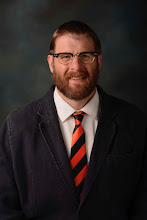
follower of Christ, husband of Abby, father of Christian, Georgia Grace, and Rory Faith, deacon at Kosmosdale Baptist Church, tutor with Scholé Christian Tradition and Scholé Academy

Friday, November 20, 2009

Abby's Personal Testimony of God's Work In Her Life

[My wife wrote the following for a class she was taking here at the Seminary.]

I do not have authority over my own life. My parents took me to church every week while I was growing up. I learned many Bible stories and what the Bible states about the character of God and His relationship with mankind. I believed with childlike innocence that God created the world and was the only God and thus worthy of mankind’s worship. I believed He was holy and hated sin. I could tell you I was a sinner for I could recall many instances when I had disobeyed my parents and harbored completely unholy attitudes. I believed what the Bible says about sin separating mankind from God and that the penalty for sin is death and an eternity in hell. I also believed that God Himself provided a Savior from mankind’s pitiful destiny. That Savior is His only Son Jesus Christ, who came to earth, lived a perfectly holy life and then died in mankind’s place to take on Himself the punishment for our sins. I knew that after He had been dead three days He rose to life again, proving that He has power over death, and now is in heaven with His Father. I believed my pastor and Sunday School teachers when they said that belief in these facts could rescue a person from their eternal fate in hell and confirm them a place in heaven with God for eternity. I firmly believed all this, but as with most, the cares of childhood outweighed any thoughts about the future or my eternal destiny.

That changed when I was around ten years old. There was a guest preacher at our church for a week, and he went over and over those facts I already believed. However, he also emphasized that belief in those facts should result in a life submitted to the authority of Jesus Christ. He also taught that only God could bring about that kind of change in a person. I couldn’t let go of his words that week, and now I know that God was working in me to turn all my belief into life-changing belief. If someone had asked me to articulate all this at that time, I would have said something like, “I knew Jesus was not a part of my life and I needed Him.”

After that my life began to change. I began to feel guilty over wrong things I did or bad attitudes, and not just guilt in the fact that I could be punished or concern over what my parents thought, but deep concern over what God thought about my actions and attitudes. I had a desire to please Him and wanted to follow His instructions for living that are laid out in the Bible. I was driven to read the Bible, and I am sure God was allowing me to understand what it said.

All of these changes have only increased through the years. I still struggle with sin on a daily basis, but I am confident that God is working in me to make me more holy. The Bible also assures me that when I acknowledge my sins and turn from them I have God’s forgiveness because these sins were paid for in Jesus’ death. I now understand the meaning of the verse, “If you confess with your mouth Jesus is Lord and believe in your heart that God raised Him from the dead, you will be saved.” I had always believed these things, but it wasn’t until Jesus became my Lord, meaning the authority over my life, that I was rescued from my fate as a sinner and guaranteed to spend eternity with Him in heaven. My motto for living has become another Bible verse, “He died so that those who live should no longer live for themselves, but for the One who died for them and was raised.” Of course, this kind of living can only begin and be carried out through God working in a person to change them.

Labels:

Monday, April 14, 2008

“I’m done with American Idol.”

[The following was written by my wife Abby at my request concerning her response to the American Idol performance of "Shout to the Lord" last week.]

I think it’s great that so much money was raised to combat malaria in Africa & give to different children’s & medical programs in the US. My husband & I prefer to give money to ministries that do those things in Jesus’ name, but it’s great that so many other folks gave to Idol Gives Back. I enjoyed all of the program that I saw in between caring for my 6 month old. And then the finale happened. Ryan announced that the competitors would be singing “Shout to the Lord.”

I did a double take at the screen. “What did he say? There must be some other song called ‘Shout to the Lord.’ They’re not about to sing one of the most beautiful praise songs ever.”

Then the familiar music started. “No way.” My mouth hung open in disbelief. “What did they just sing? ‘My Shepherd?’ They changed the lyrics?” It sounded awesome. I was enraged. Steam started coming out of my ears. “No they’re not. Who picked that? What idiot at CCLI let them do this? No they’re not. I don’t believe this. Why on earth? I wish I could see Simon’s face. David? David Cook, who last night declared in his song choice that ‘we are all innocent’ is now singing ‘Shout to the Lord,’ to my God? Do they have any idea who they’re singing to? Does anyone in the audience know who they’re singing about? Do any of the judges, anyone backstage, know that that is the God of the universe they’re referring to & will cast them into the lake of fire for all eternity if they do not repent of sin & confess Jesus Christ as Lord? Maybe some of them know that. But I’m also sure some of them don’t know that, & they’re singing & approving this beautiful song about my God anyway.”

And then Ben Stiller closed the show with 3-4 bleeps for using the F-word. What a way to close! I couldn’t wait for Andrew to come home & share my shock & anger. To my dismay, my usually laid back husband remained just that, laid back…& academic. “I understand what you’re saying. You know, there’s been a debate about this for a long time. One side says the exact thing you’re saying, that for nonChristians to say (or sing) something like that without acknowledging Christ as Lord or living like Christ is Lord, is blasphemous, honoring with lips & not with hearts. Others refer to Old Testament passages where God caused heathen men to praise Him such as Belshazzar praising the Lord as God after seeing the writing on the wall & yet we don’t have any proof from Scripture that those men were truly converted, those instances seemed to be a one time thing.”

“Oh,” I replied. “Well…those are good arguments.” As a result, I’m not really sure where I stand & I haven’t taken the time to examine this more in the Bible. Andrew & I have talked about it some & listened to Todd Friel’s take on it on Way of the Master Radio. He really focused on the fact that they took Jesus’ name out of the song. I was more angry that they sang it at all, with or without Jesus’ name. I took sort of a possessive stance: “How can they sing about MY God that they don’t know?”
All of my days I want to praise
The wonders of Your mighty love…
Let every breath, and all that I am
Never cease to worship You
“Empty promises to MY God!” my mind screamed. “I long to mean those words with all my being & they sing them without repentant hearts!”

Please note that I’m not singling out the contestants, I took this show & the song to represent all of American Idol, especially those who had a say so in the order of that episode. I remember Simon criticizing Mendesa (sp?) 2 years ago when she sang a Christian song. Now he’s part of a show that just performed “Shout to the Lord?” Why can’t they keep it secular!?! I also must remind myself that I don’t know anyone’s heart, I barely know my own. Maybe some of the contestants are Christians & could really sing those lyrics from the heart. Maybe it caused some to question their sinful state & will one day repent of their sin & turn to Christ. As Paul states in Philippians 1:18, “But what does it matter? The important thing is that in every way, whether from false motives or true, Christ is preached. And because of this I rejoice.” Granted, the Gospel was not proclaimed & Jesus’ name was omitted, but the rest of the song is in line with Gospel teaching.

I didn’t watch Thursday night’s episode when they sang the song again with Jesus’ name included. I’m told that no explanation was given about the song. The whole thing really leaves me scratching my head & I think I’ll skip the rest of the season to be on the safe side. I read some of the comments on Idol’s website. Most were rejoicing that this song aired. I caution anyone before they jump for joy or scream in anger to really think about this issue & not just go with an emotional reaction.

[For another insightful post on this subject, click HERE.]

Labels:

Sunday, September 09, 2007

New Family Blog

This week, inspired by our friends Nathan and Courtney White, my beloved wife Abby created a blog on which to post our family pictures so that friends and family can see how we are doing. (We expect our family will be especially interested in pictures of baby Christian once he is born.) The new blog can be viewed HERE.

Labels: ,

Sunday, February 18, 2007

Why is there a need for seminaries overseas? by Abby Lindsey

[Introduction by Andrew Lindsey: Last month, my wife, Abby Lindsey, began studies in the Seminary Wives Institute (SWI) of the Southern Baptist Theological Seminary (SBTS). SWI exists for the purpose of educating and equipping the wives of men studying at SBTS so that they may be better prepared for future ministry. SWI offers courses that are designed to give ministers' wives biblically based and practically applied teaching. Courses are taught by SBTS faculty as well as faculty wives and guest speakers. In one class Abby has already completed, she was required to "develop a topical speech in an area of interest." Abby decided to compose a speech on a topic directly related to our primary post-seminary ministry goal. What follows is the content of the speech she prepared. I am posting this article because many people- particularly people from our home town and people we work with here in Louisville- ask why we are here at SBTS. What you are about to read goes a long way toward answering this question.]

WHY IS THERE A NEED FOR SEMINARIES OVERSEAS?

This topic is particularly special to me right now in my life. My husband is currently in seminary preparing, Lord willing, to teach theology in a seminary setting in another country. This has been a dream of ours for several years, and we feel that having seminary-type schools in other countries is essential to the spread of the Gospel and the church. It is my aim in these few minutes to convince you of this as well and to instill in you an excitement about what God has been doing since creation, calling people from all nations to Himself.

Main points:

1. American Christians already realize that foreign missions are important-people must hear the Gospel in order to be saved. What happens after the Gospel is shared and people repent? Where do they go for more knowledge of the Bible? What can they do if they cannot get a personal Bible? Should they grow more mature in Christ after conversion, or should our missions efforts stop at conversion? We have higher expectations in the U.S.; otherwise, we would not attend church every week. We obviously think we need to grow in our knowledge. Thus, we also understand that planting churches is an important function of foreign missions.

2. With that in mind, who should oversee those churches? The missionaries who planted it? They may very well oversee the teaching and functioning of the churches for a long time. Who will step up when for one reason or another the missionaries must return to the U.S. or wherever they came from? We’ve all heard of vibrant churches with great pastors that severely dwindled when the pastor left. That is a common tale on the mission field when the missionaries leave. We do not want this to be the end result of all this labor! Church leadership must rise from the people group where the church is planted. This will better ensure a growing church and one that is more in line with the culture of the people group (i.e. worship in their language, in their music, in their setting). They will feel more ownership of their church and be more likely to serve the body of Christ. [See Acts 14:21-23, concerning when Paul and Barnabas strengthened the church, appointed elders, and left.]

3. These local leaders will need biblical training. We expect no less of our leadership in the U.S. Every church member hopes their pastor knows more about God’s Word than himself. Locals are not ready to take on leadership immediately after their conversion. They need time to learn and study. Equipped teachers for these new leaders are vital. These education settings do not need to be as formal as seminaries are in the U.S. If that is possible, then great, but any setting where sound theology and biblical guidance in matters of preaching and counseling is taught and questions are welcomed is essential.

In closing, I would like to share an example of how this is actually working in Kenya. This story appeared as the top story on the International Mission Board’s website December 4, 2006. The story in its entirety can still be found in the archives. The story highlights Vance and Cherry Kirkpatrick. “Veteran Southern Baptist missionaries, they’ve spent the past 35 years in Kenya. They’re teachers. Vance is a theology professor at Kenya Baptist Theological College. The numbers are intimidating. There are more than 163 million people who haven’t been reached for Christ in Central, Eastern and Southern Africa. That’s 59,000 individuals for every one of the 500-plus Southern Baptist missionaries in the region. In the early 1980s, the Kirkpatricks helped found what today is known as Kenya Baptist Theological College. With just 10 students in its first graduating class, the college today boasts an enrollment of more than 250. Classes range from general theology to Christian music to studies of African traditional religion. Most students graduate with a certificate or diploma in theology; a bachelor’s degree also is an option. Though it’s hard to argue that grounding Kenyan pastors, ministers and missionaries in sound doctrine isn’t a worthy pursuit, what about the payoff? Vance cites a church in Nairobi as a good example. Both the pastor and assistant pastor are graduates of Kenya Baptist Theological College. Church members recently made the decision to send missionaries of their own to an unreached people group about 200 miles away. We checked that one off the list,’ Vance said. ‘More and more of our students are finding ways to be missionaries to unreached (people groups).’ That type of self-motivation and independence is exactly what the Kirkpatricks want to see from the Kenyan church. The alternative, Vance pointed out, can be a crippling dependency. Without theological education, the new church is inordinately dependent on foreign interpretations, applications and emphasis related to their faith,’ he said. ‘We have to make it an African Christianity, not a Western imitation.’”

As the Kenyan church and the Kirkpatricks illustrate, for the spread of the Gospel and the church, for new churches to grow after missionary presence is gone, and for other nations to fan the flame of missions, theological education overseas is vital. I hope you have a new curiosity for this ministry, and I pray this service continues to expand in our missions organizations.

Labels: