

Call To Die

Then [Jesus] said to them all, "If anyone wants to come with Me, he must deny himself, take up his cross daily, and follow Me. For whoever wants to save his life will lose it, but whoever loses his life because of Me will save it. (Luke 9:23-24, HCSB)

My Photo
Name:

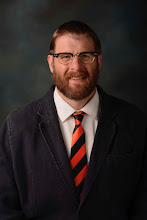
Follower of Christ, husband of Abby, member of Kosmosdale Baptist Church.

Thursday, January 22, 2009

Prayer and Fasting for Obama on the Roe v Wade Anniversary

Today is the 36th anniversary of the Roe v Wade decision, legalizing abortion nationwide. In regards to his support of "abortion rights" President Obama has been quoted as saying, "On this fundamental issue, I will not yield." The President's pro-"abortion rights" supporters will certainly be expecting him to make an executive decision in their favor to mark the anniversary of Roe v Wade, perhaps by overturning the Mexico City Policy.

During his inauguration address, President Obama gave several examples of heroism expressed through the lives of ordinary Americans; among such acts of heroism, he mentioned, "a parent’s willingness to nurture a child." I pray that President Obama's heart would be changed concerning the issue of abortion and that he would be willing to display a heroism consistent with the best sentiments expressed in his speeches; I pray that he would be willing to disappoint his constituents and to admit the fallacy of his former pro-"abortion rights" position. I pray that he would not overturn the Mexico City Policy today, nor would he use this day to in any way support legalized child murder with his executive authority.

I ask my brothers and sisters in Christ to join with me in fasting and prayer today for God's mercy in protecting the lives of the unborn from unjust executive policies.

Labels:

Tuesday, January 20, 2009

Prayer on Inauguration Day


1 First of all, then, I urge that supplications, prayers, intercessions, and thanksgivings be made for all people, 2 for kings and all who are in high positions, that we may lead a peaceful and quiet life, godly and dignified in every way. 3 This is good, and it is pleasing in the sight of God our Savior, 4 who desires all people to be saved and to come to the knowledge of the truth. (1 Timothy 2:1-4 ESV)

Readers are urged to be in special prayer for our nation's leaders today, and especially for the out-going and in-coming Presidents. We have been blessed in the United States to have a system of government in place in which we regularly, every four to eight years, inaugurate a new president, and this inauguration takes place in a dignified, amicable manner no matter how sharply out political parties may disagree with one another. In other nations important changes in power are only accomplished through great strife or even warfare, but in the United States the nation as a whole has afforded the opportunity for its citizens to lead "a peaceful and quiet life" within our borders (I do want to acknowledge that there have been horrible and sometimes persistent exceptions to this rule, mostly due to racism, but the election of Obama demonstrates that great gains have been made in redressing these kinds of injustice as well). With 1-2 million people gathered in Washington D.C. today, and with the real threat of terrorism, both international and domestic, we need to pray for law enforcement in our nation's capital as well as for God's kind providence that today's ceremonies would go without incident.

In praying for our new President today, I am praying for the following (I give this list with the hope that it may give readers some ideas for how they may pray for Obama):
  1. I pray that President Obama will be granted godly humility to know that we humans are limited in what problems we can fix- that, indeed, our plans, no matter how thoroughly thought-out, are not immune from unforeseen disaster- and so we must depend on God: on His strength, wisdom, and gracious providence.
  2. I pray for the health and safety of President and Mrs. Obama, and for the health and safety of their precious daughters: Natasha and Malia Ann.
  3. I pray that as Commander-in-Chief of the Armed Forces President Obama would lead our troops justly and according to wise counsel.
  4. I pray that God would change President Obama's heart in regards to the matter of abortion. (This change is not beyond the power of God to effect, as I explored in a previous post.)
Readers are encouraged to leave a comment, telling how you will be praying for those in authority today.

Labels:

Friday, January 16, 2009

Absolute Necessity

As I have been posting my personal confession of faith on this blog [explanation HERE], the last article I posted was on providence. In this article I confess that "all events occur by absolute necessity." This confession concerning absolute necessity was a key feature of the Protestant Reformers' dispute with the Roman Catholics, as explained by John Calvin in his book, The Bondage and Liberation of the Will. In confessing that "all events occur by absolute necessity" the Reformers were asserting the sovereignty of God over His creation in such a way as to rule out the possibility that: 1) anything occurs by mere chance, and especially, 2) that salvation is in any way dependent on the 'free-will' decision of Man. The Reformers considered themselves bound to deny both of the concepts just mentioned by specific biblical texts, for example: 1) "The lot is cast into the lap but its every decision is from the Lord" (Proverbs 16:33 NASB), 2) "So then it does not depend on the man who wills or the man who runs, but on God who has mercy" (Romans 9:16 NASB).

Anyone seeking to take the biblical text seriously must affirm the doctrine of absolute necessity as explained above.

There is another way that some have understood absolute necessity; that is, according to a doctrine that theologians call "divine necessitarianism." According to this doctrine, God orders His creation in a way that most magnifies His glory. The way in which He orders creation, then, springs from His character, and if there were another way for events to occur in which God's glory would be better demonstrated, then God would have ordered His creation differently. Divine necessitarianism presupposes that God's glory would not be equally magnified in a world created differently nor in a different order of events within this creation. If the doctrine of divine necessitarianism is in Scripture, it is, I think, more implicit, and I do not think that an affirmation of absolute necessity as described in the first paragraph of this post necessarily commits someone to divine necessitarianism.

I welcome comments about absolute necessity and divine necessitarianism below, especially if readers feel I have been unclear in my explanation of these doctrines.

Labels:

Wednesday, January 14, 2009

Prayer Request (1/14/09)


A co-worker at UPS named Shane has apparently been hospitalized, having had both lungs collapse at some point this past weekend. My supervisor does not feel at liberty to divulge any more specifics of Shane's medical condition. Please keep Shane in your prayers and pray that I would have some opportunity to minister the gospel to him.

Labels:

Sunday, January 04, 2009

Anselm on Original Sin


Anselm’s definition of key terms

  1. Original [or Natural] Sin: A state of injustice contracted in one’s origin due to the corruption of human nature.
  2. Personal Sin: Injustice committed by an individual subsequent to his or her origin.
  3. Justice: “The rectitude of the will preserved for its own sake.”

Discussion of above definitions

An understanding of “rectitude” is obviously foundational to Anselm’s definition of justice. Alister McGrath, in Iustitia Dei, examines Anselm’s meaning of “rectitude” and concludes that this term refers to “the basic God-given ordering of the universe.” Taking this meaning of “rectitude,” “justice” is understood as “a state in which the will is in accordance with the basic God-given ordering of the universe for the sake of maintaining this order.” Anselm writes “for its own sake,” which I have translated, “for the sake of maintaining this order,” to make the point that choosing the right thing for the sake of something else– for example, due to legal compulsion or due to a desire for the admiration of others– is not in accord with a proper definition of “justice.” When Anselm writes “preserved for its own sake”– the sake of the rectitude– I believe he would agree that ultimately “the rectitude of the will” is to be preserved for the glory of God.

In accordance with the above discussion, Original [or Natural] Sin as defined by Anselm may be understood as “a state contracted in one’s origin due to the corruption of human nature in which the will is in discord with the basic God-given ordering of the universe.” Personal Sin may then be understood as “an act of the will contrary to the basic God-given ordering of the universe committed by an individual subsequent to his or her origin.”

Anselm understands Original Sin as a debt against God. This debt must be paid, and the payment of this debt applied to the account of an individual, if the individual is to be saved.

A question addressed by Anselm: Are the sins of ancestors subsequent to our original parents also passed on to their offspring ‘to the third and fourth generation’?

Anselm argues that the sins of ancestors are not added to the debt of Original Sin and are not passed on to ancestors after the manner of Original Sin. Adam is seen as unique as being able to pass on his justice or injustice (as defined above) to his offspring. Just as subsequent ancestors cannot pass on their righteousness to their offspring, they cannot pass on their sin to their offspring. Due to the Fall, humans originate in a state of no justice. Subsequent acts of sin on the part of ancestors, springing from this state of no justice earn condemnation for those ancestors alone and cannot add to this original deprived state.

My question: Does Adam's sin nature, inherited by each individual from the moment of conception (Psalm 51:5) necessitate that every individual [Christ excepting] is under God's condemnation for Adam's sin from the moment of conception?

Anselm’s answer to this question is surprising. Anselm teaches that Adam’s sin nature inherited by each individual [Christ excepting] necessitates that each individual is under God’s condemnation from his or her origin. Unusually, Anselm does not believe that the origin of an individual person is found at the moment of conception. Anselm writes:

It is against the common human conviction, however, that an infant has a rational soul right from the moment of its conception. For it would follow that every time a human seed that has been conceived perishes before it attains to a human figure– even right after the instant of conception– a human soul is lost with it, because it is not reconciled through Christ. But that is simply absurd. This alternative, therefore, ought to be relinquished entirely.

Apparently, from what he writes subsequent to the above paragraph, Anselm holds to an idea of “quickening”– that the infant becomes an individual human life at some point after conception but prior to birth. If I am reading Anselm correctly, then this idea of “quickening” does not truly address Anselm’s concern because individuals could still die in the womb and thus be eternally lost (again, taking Anselm’s perspective), as they would have had no chance to be baptized (Anselm, like Augustine, believes that baptism washes away Original Sin). As it stands, Anselm’s ideas concerning individual human origin would be more consistent if it was argued that an individual human soul originates after one is born; then, taking Anselm’s understanding of baptism, his concern about infant salvation would be better addressed. One problem with Anselm’s idea of “quickening” is that it provides the basis for an argument for abortion (if the argument is adapted according to my suggestion, in order to make it more consistent, then an even more serious problem is raised in that infanticide would not be considered murder), though I suspect Anselm would argue that abortion was somehow contrary to the natural order established by God.

An even more serious problem with Anselm’s idea of “quickening” (and the basis for why I think abortion is such a serious issue) is that the Bible presents individual human life as beginning at the moment of conception. Anselm acknowledges that this appears to be the case in passages such as Psalm 51:5, “Behold, I was shapen in iniquity; and in sin did my mother conceive me” (KJV). While this verse would make it appear that one was “in sin” from conception, Anselm asserts that the Bible often speaks of things that will surely happen as if they had already come to pass. In this regard, he refers to Genesis 2:17b, “for in the day that thou eatest thereof thou shalt surely die” (KJV), and notes that Adam did not die on the day he ate of the forbidden fruit. I would counter this by noting that Adam did die spiritually at that time, that all his descendants are described as being naturally dead in trespasses and sins (see Eph 2:1), that verses such as Psalm 51:5 lead to the conclusion that this spiritual death takes place at conception, and that there is no reason to assume that Psalm 51:5 teaches otherwise unless one takes the presupposition that individual personhood cannot begin at conception. Anselm takes this presupposition, but in no way proves it from Scripture.

This brings me back to the question that prompted my study of Original Sin. Might it be possible that personhood begins at conception and that some effects of Adam’s sin do begin to take hold at this origin of personhood, but that the guilt of Adam’s sin is not imputed until a person attains rationality? I will seek the answer to this question (whether such a distinction is biblically legitimate) as I continue this study.

Labels: